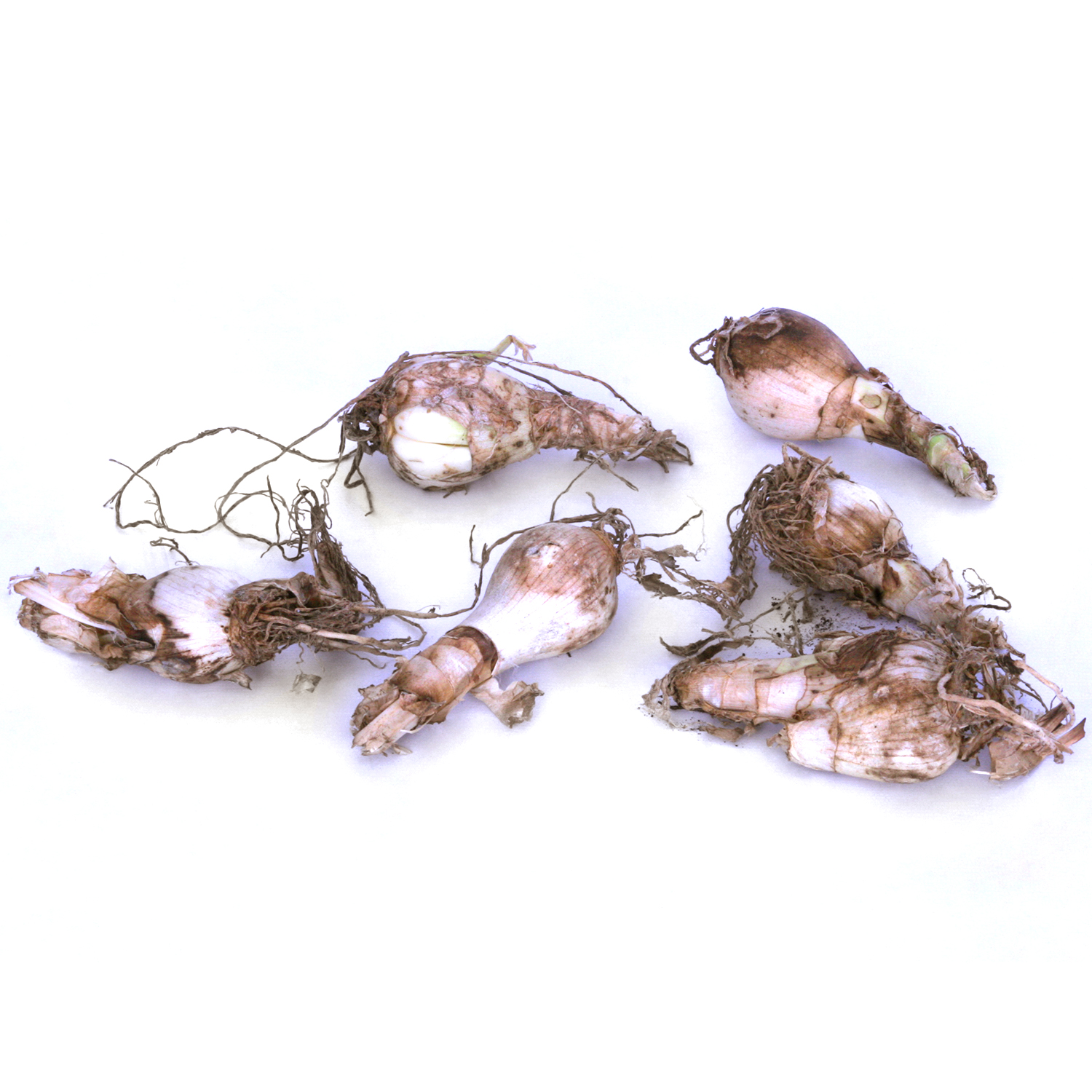
Cape Flower, Guernsey Lily, Japanese Spider Lily
| When to Plant: | |
| Spring |
| Blooms: | |
| Late Summer to Fall |
| Light Requirements: | |
| Full Sun to Partial Shade |
| Plant Height: | ||
| Varies by type. Ranges from 10-24". | ||
| Hardiness Zones: | |
| Grow as Perennial in zones 8-11. Grow as Annual elsewhere. Find Your Zone |
| Planting Depth: | |
| 6-8" with top 'point' of bulb exposed above soil line. |
| Plant Spacing: | |
| 8-12" |
| Plant Type: | |
| Bulb |
 Nerine bulbs are grown for their sphere-shaped heads of pink to red and occasionally white, wavy-petaled, lily-like blooms.
This South African native is a close relative to Crinum and Amaryllis. It is long-lived and may take a year or two to establish itself and bloom. Blooms normally appear before the green, arching, lance-shaped foliage. Some varieties are semi-evergreen.
Plant Nerine in the spring after all danger of frost has passed. Nerine performs best in full sun but will grow in partial afternoon shade.
The ideal soil is rich and porous and drains well, yet still holds enough water for the roots. If your soil is heavy clay and drains slowly, or very sandy and does not hold water, add organic soil amendments like peat moss or ground bark. Spread a 3-4 inch layer of soil amendment if needed and incorporate into the soil to a depth of 10 inches.
Plant bulbs 4-6" deep with the neck or top of the bulb emerging from the soil and 8-12" apart. Cover with soil.
When planting a large number of Nerine in one bed, excavate the entire area to the recommended depth, work fertilizer into the bottom of the trench, set out bulbs and then cover all at once. Water thoroughly at planting. While actively growing, water frequently and thoroughly so that water will reach roots. Mulch to keep the soil cool and to prevent the soil from drying out.
Fertilize twice a year.
Do not cut foliage back until the leaves have yellowed and died.
Lift and store over winter if planted in colder climates. Mulch in milder climates to protect from frost.
Nerine is poisonous to animals so make sure to plant away from pets' outdoor areas.
Nerine prefers lots of sun, quick draining soils and not a lot of fertilizer.