Finger Lime
(fin·ger - lime | \ 'fiŋ-gər-līm \)
Also Known As:
Australian Finger Lime, Citrus Caviar, Microcitrus australasica
|
Harvest:
|
|
March through June depending on location |
|
Light Requirements: |
|
Full Sun |
|
Hardiness Zones: |
|
Grow as Perennial in zones 8-11. Grow as Annual elsewhere. Find Your Zone |
|
Planting Depth: |
|
Deep enough so that the root ball is even with ground level. |
About
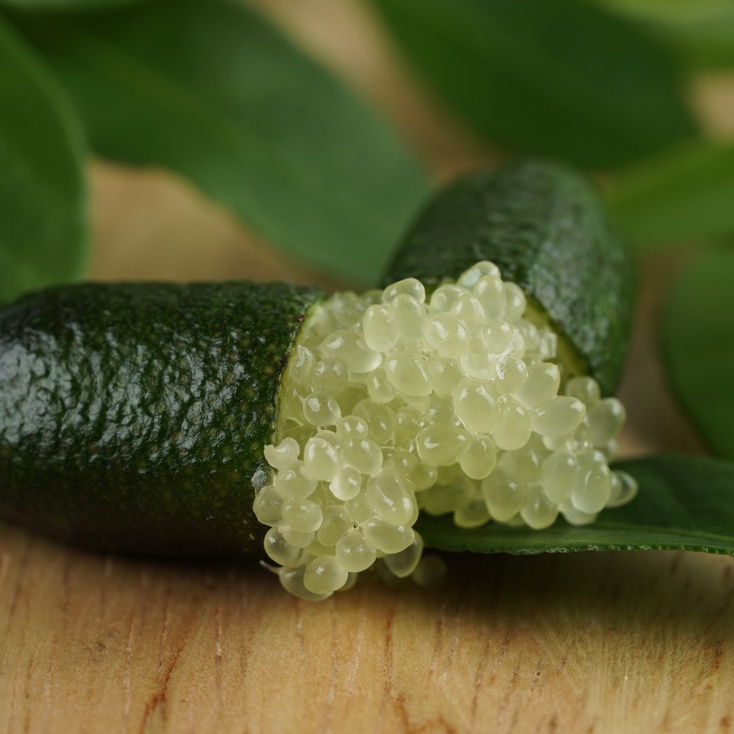
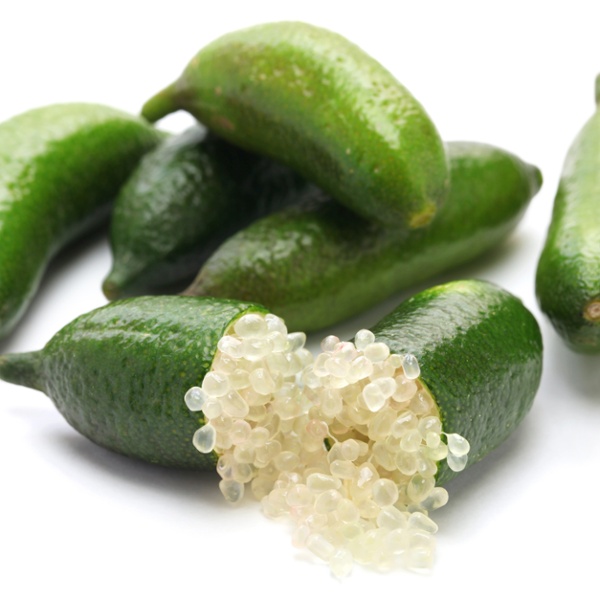
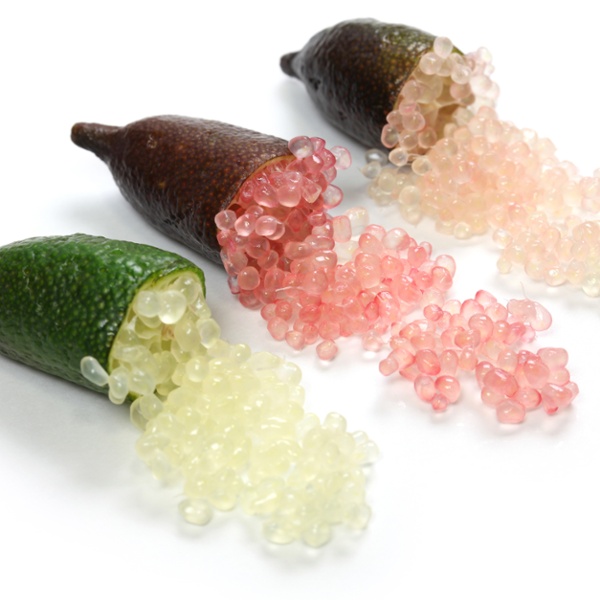
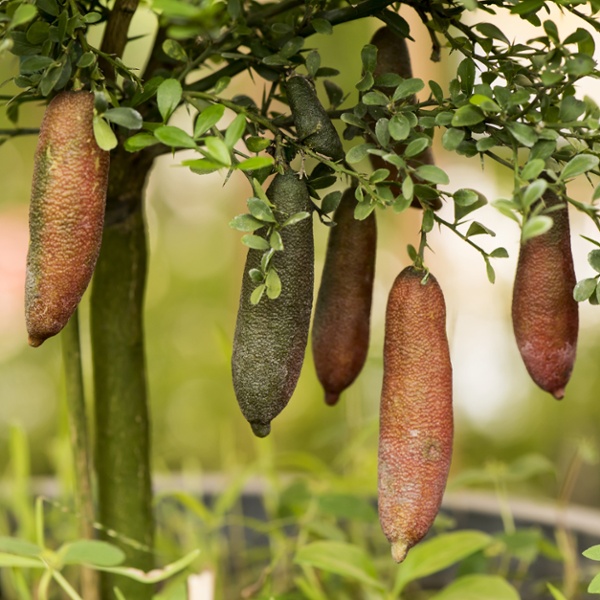
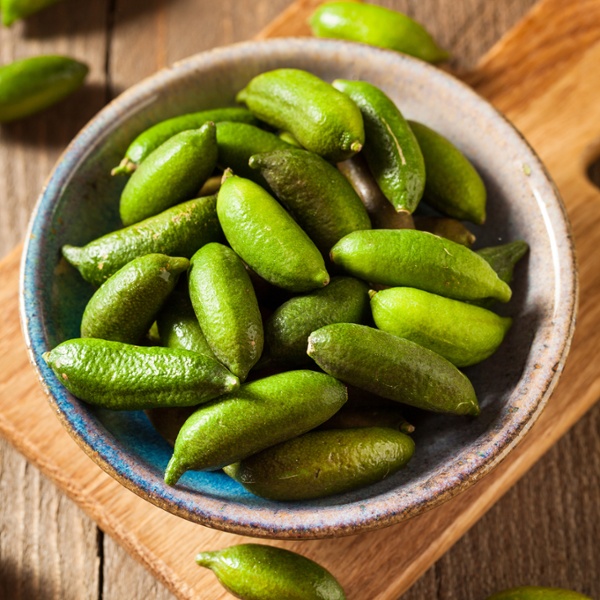
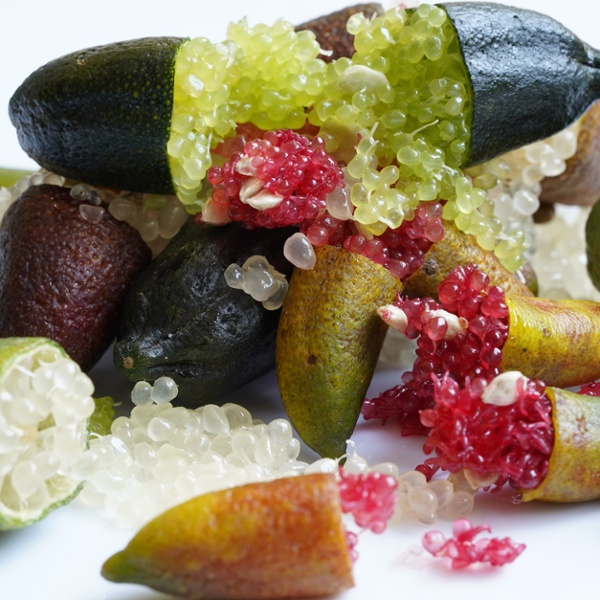
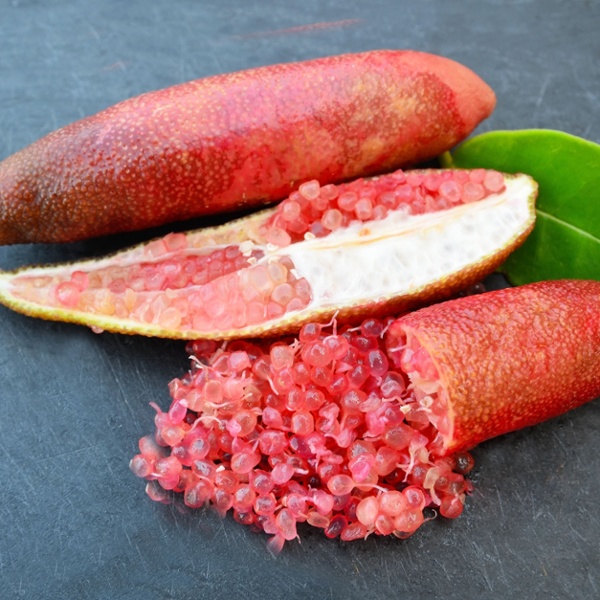
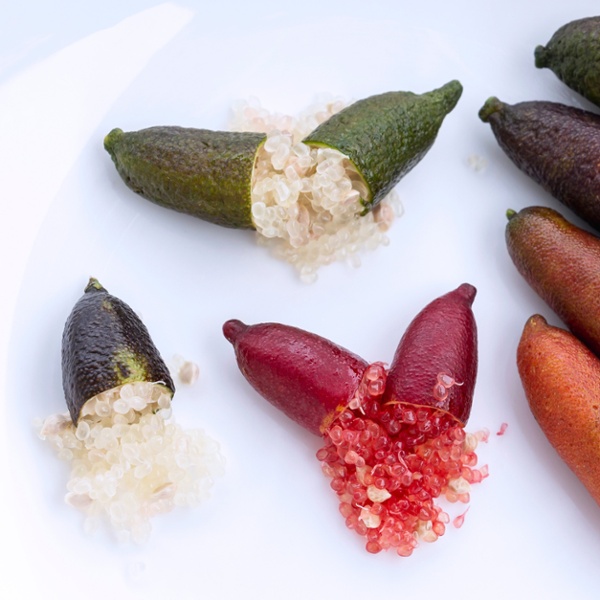
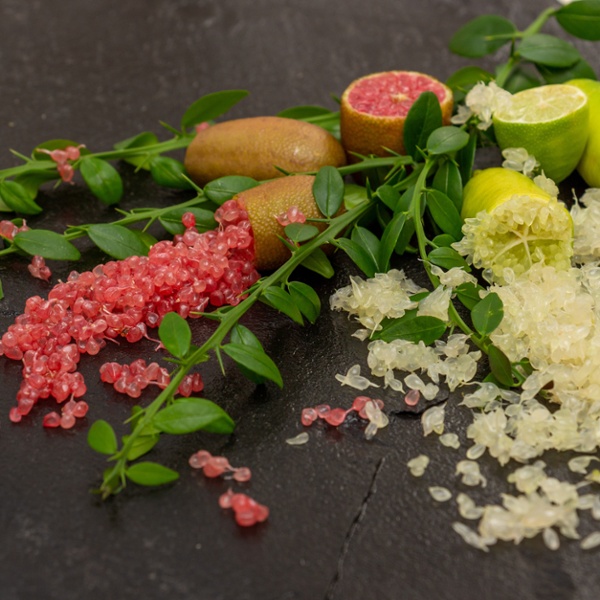
Finger limes are native to Australia where it grows in the rainforest as a compact shrub or small tree. Finger lime trees produce small, evergreen leaves with a thorn at each axil. Its flowers are bright pink and fade to pale pink or white. The finger lime fruit is elongated and cylindrical, known as resembling a finger. Finger limes are often referred to as 'citrus caviar' due to its flesh that contains many small vesicles, also known as pearls, crystals, or globular pulp. The vesicles are non-attached, firm, juicy and burst with a tart flavor when eaten. The fruit is considered a culinary delight and is prized by chefs all over the world.
Highlights
- Unique fruit prized by chefs worldwide
- Flesh contains tart, round, juicy lime pearls or vesicles
- Produces 'finger-shaped' fruit
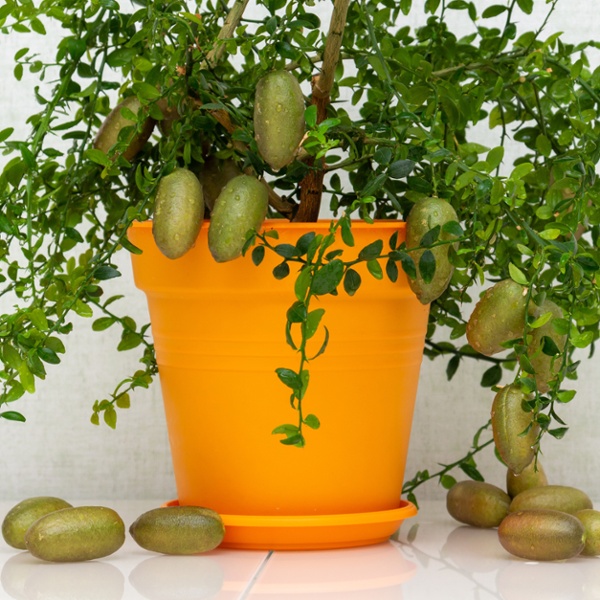
- Compact and bush-like
- Perfect for growing in containers
Planting Care & Instructions
To plant: Find a full sun location that receives 6+ hours of direct sun per day. Dig a hole slightly larger than the spread of the plant's root system. Place the plant in the center of the hole. Spread out the roots and back fill with soil. Firm the soil around the roots as you back fill. Water thoroughly at planting and as needed during the growth process. Add 2-3" of mulch to conserve moisture. Continuing care: If growth stalls, it may be necessary to shift plant to larger container. Fertilize every 4 months with citrus fertilizer. Contact your local county extension agent for diagnosis of suspected disease or other issues.
Growing Tips
Finger limes trees are self-fertile but will yield heavier crops when pollinated. Best planted in containers to be able to move tree indoors when temperatures drop and frost is expected. Prune tree in early spring to maintain shape and encourage new growth. Remove any dead branches. It is recommended to wear thick, impenetrable gloves when handling and harvesting to avoid being pricked by thorns.