





Narcissus, Jonquil
| When to Plant: | |
| Fall |
| Blooms: | |
| Early Spring to Late Spring |
| Light Requirements: | |
| Full Sun to Partial Shade |
| Plant Height: | ||
| Varies by type. Ranges from 10-18". | ||
| Hardiness Zones: | |
| Grow as Perennial in zones 3-8. Grow as Annual elsewhere. Find Your Zone |
| Planting Depth: | |
| 3-5" |
| Plant Spacing: | |
| 3-5" |
| Plant Type: | |
| Bulb |
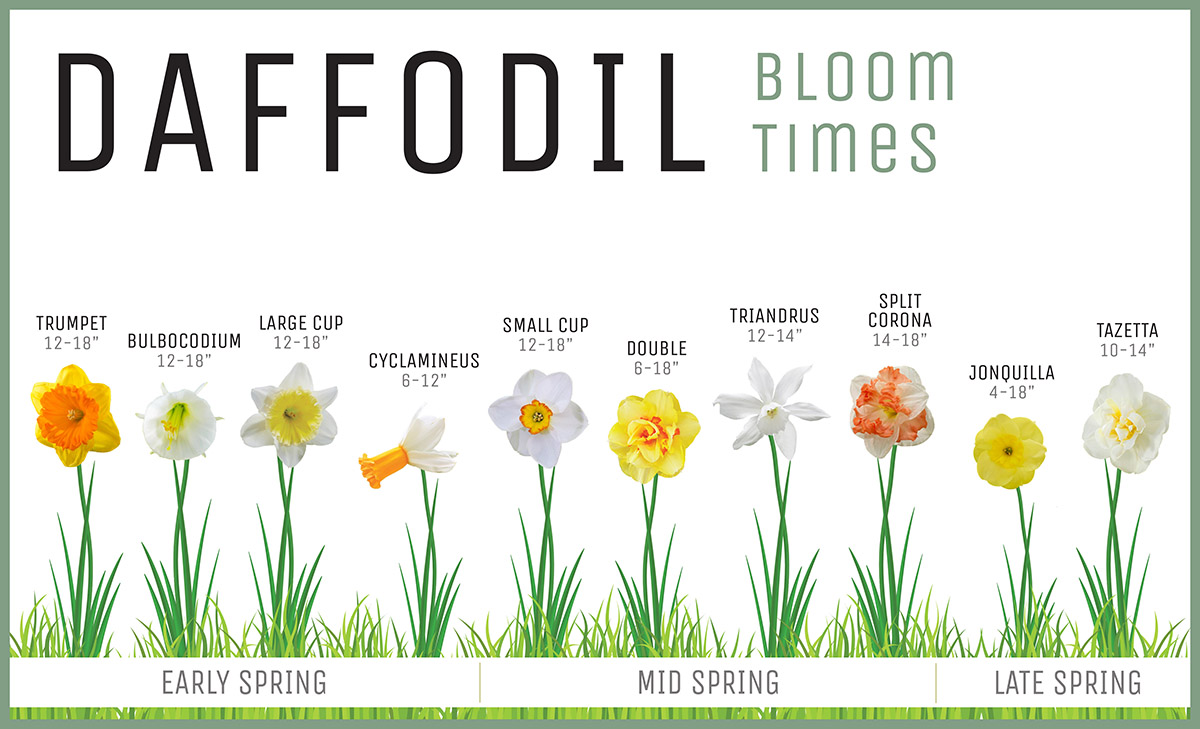
Daffodils (botanically known as narcissus) flower in spring, are winter hardy and multiply rapidly. Daffodils are long-lived perennials, making them perfect companions to not only other spring flowering bulbs, but also annuals, other perennials and shrubs. Daffodils soften hardscapes, accent any garden and are an inexpensive solution to adding color to your spring garden and containers. With its deer and critter resistant attributes, daffodils are ideal for large plantings and naturalizing to provide years of easy spring color. Daffodils are grouped in over 10 divisions. Here are a few of our favorites.
TRUMPET daffodils have the traditional daffodil form - one large blossom per stem with an exceptionally long trumpet. They are known for their long blooming season and very large blooms. Trumpet daffodils are excellent naturalizers and look amazing when planted in bunches or large clusters. Blooms very early to mid spring.
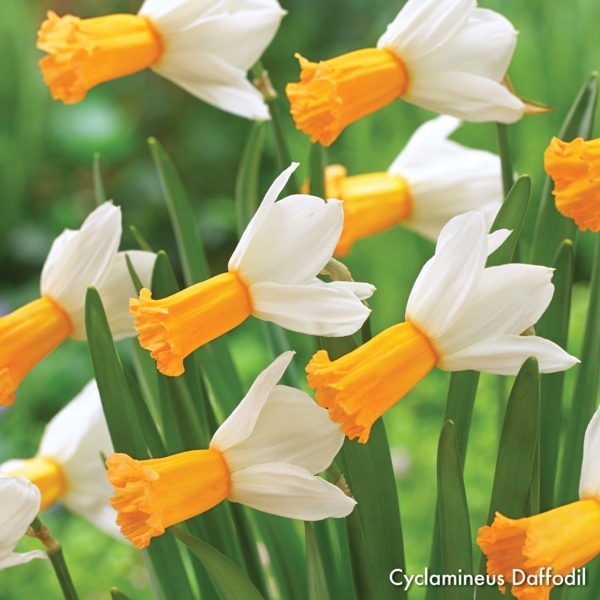
CYCLAMINEUS daffodils have a slender trumpet and reflexed petals. Most varieties are early spring bloomers. Cyclamineus daffodils tolerate shade and heavy, damp soil. Blooms early to mid spring.
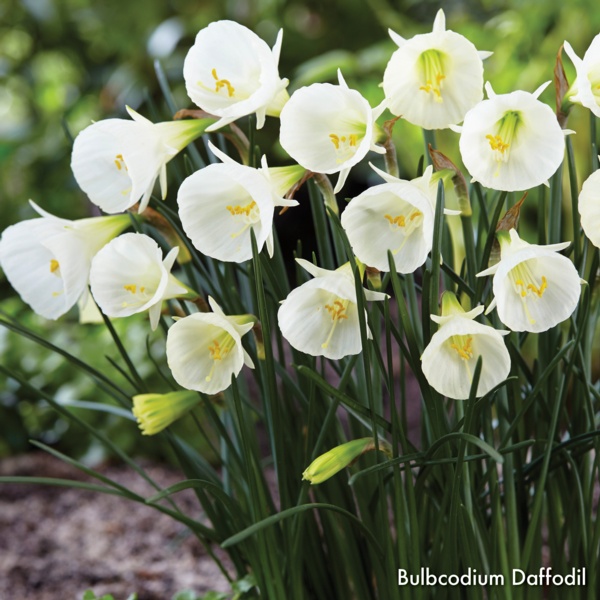
BULBOCODIUM daffodils produce flowers that usually appear alone on very short stems, showing the attributes of the hoop-petticoat varieties. The petals are insignificant and disproportionate to the large, widely flaring cup. Blooms early to mid spring.
LARGE CUP daffodils offer a full color range, wide variety of cup shapes and extreme weather tolerance. They are great for garden beds, borders, cut flowers and indoor forcing. Blooms early to late spring.
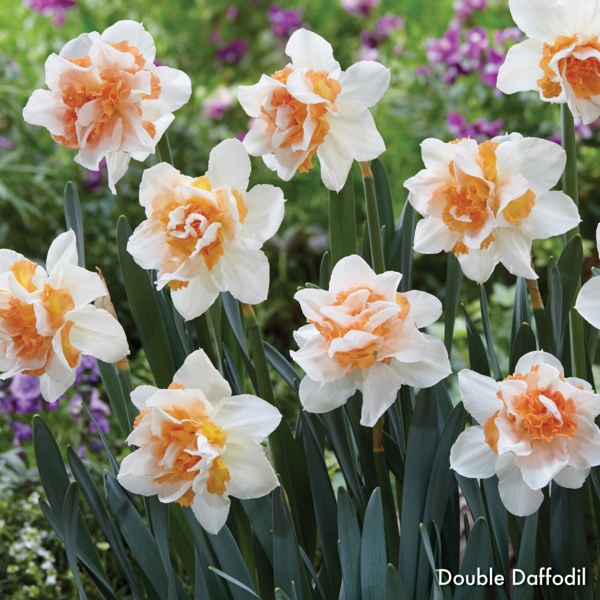
DOUBLE narcissus have extra petals - the trumpet or the petals may be doubled or sometimes both. Double daffodils are very floriferous and have a wonderful fragrance. These bloomers may require some protection from the wind. Bloom time ranges from early to late spring.
SPLIT CORONA is known for its unusual bloom shape, making it one of the showiest types of daffodils. The cup is split for at least one-half its length. Blooms mid to late spring.
TRIANDRUS daffodils are wonderfully fragrant, very floriferous and have excellent form. Its blooms nod or droop and the petals are slightly reflexed. Blooms mid spring.
SMALL CUP daffodils are noted for their brilliant colors ability to naturalize well. Blooms mid to late spring.
JONQUILLA narcissus are best known for their scent. Jonquillas are very floriferous, extremely durable and perform very well in the southern part of the United States. Blooms early to late spring.
TAZETTA narcissus perform beautifully in the deep South. These bunch-flowering daffodils produce 3-4 blossoms per stem. Tazettas have a sweet, musky fragrance. Blooms early to late spring.
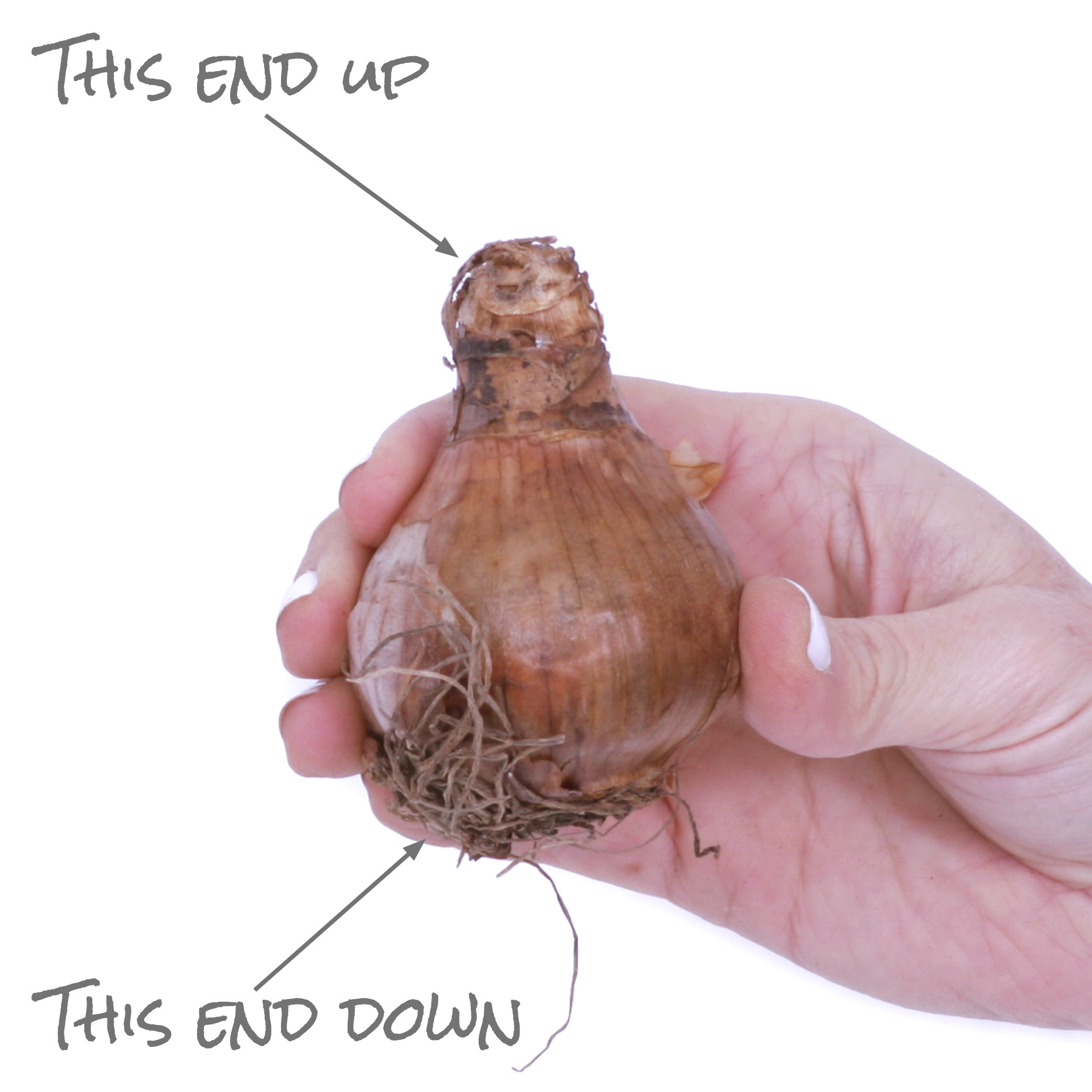 Plant in the fall, before the first frost hardens the soil. Dig a hole to the required depth. Place bulb in hole, pointed side up. Cover with soil and water thoroughly. Mulch in extreme climates.
For container planting, bury the bulb three times as deep as the bulb is wide. In zones 6 and below, you will need to protect your bulb containers. Place them near the foundation of the house or other structure. In zones 3-5, place the container in an unheated garage or shed.
After blooming, leave the bulbs in place so plants can clump or reseed. Divide only when containers or planting spaces become too crowded. Propagate in the fall by division after they have been chilled for four weeks in a moist medium.
Refer to the USDA Planting Zone Map to find your zone.
Bulbs do not like 'wet feet'. Be sure to plant in full sun to partial shade in fertile, well-draining soil. Water during the growth period. Fertilization increases growth and offset production. Cut flowers as they bloom but do not remove leaves until they turn brown. When planted properly and cared for, daffodils will return for years with little to no effort.
