

Iris hollandica; Goddess of the Rainbow
| When to Plant: | |
| Fall or Spring |
| Blooms: | |
| Late Spring |
| Light Requirements: | |
| Full Sun |
| Plant Height: | ||
| 18-24" | ||
| Hardiness Zones: | |
| Grow as Perennial in zones 5-9. Grow as Annual elsewhere. Find Your Zone |
| Planting Depth: | |
| 4-6" |
| Plant Spacing: | |
| 4-6" |
| Plant Type: | |
| Bulb |
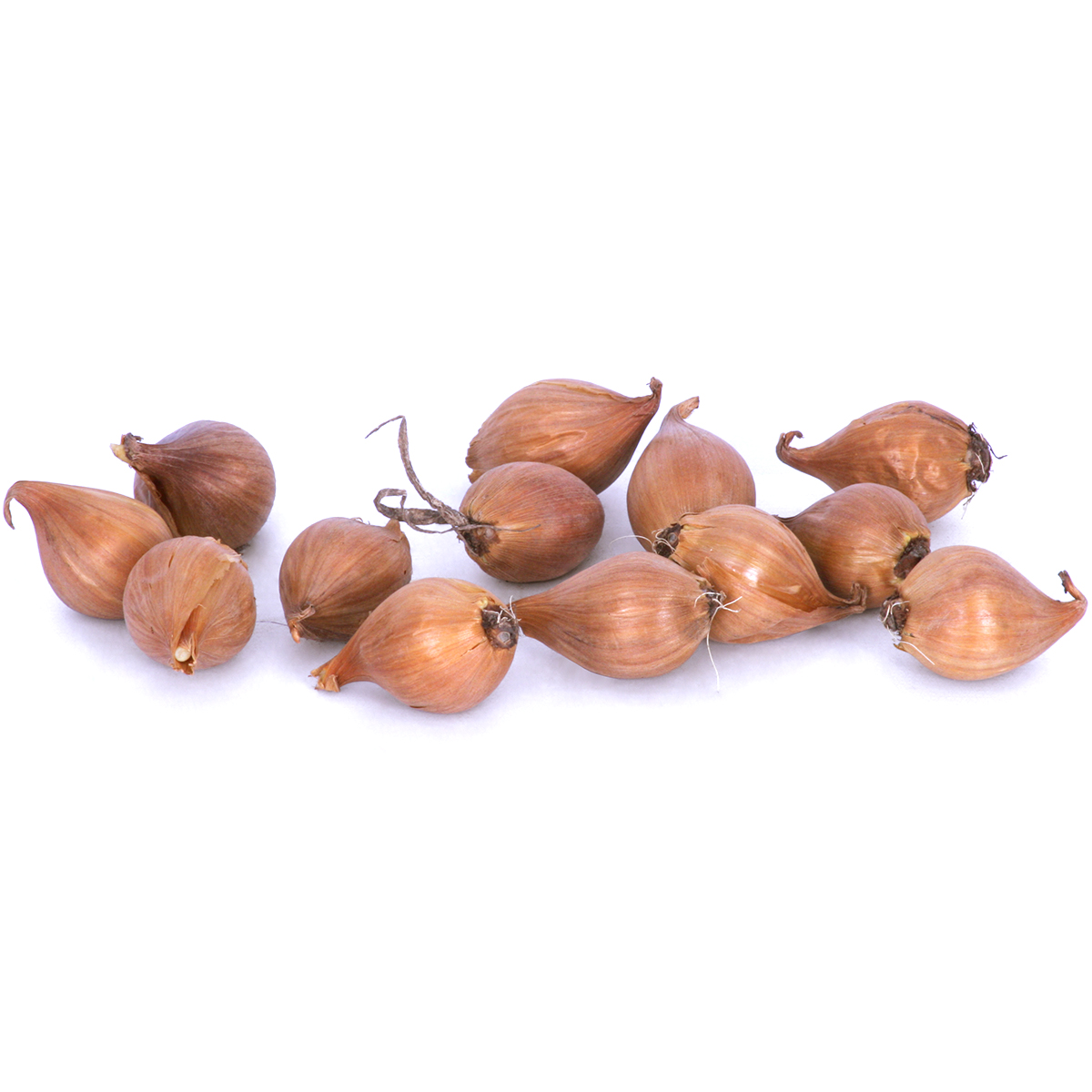
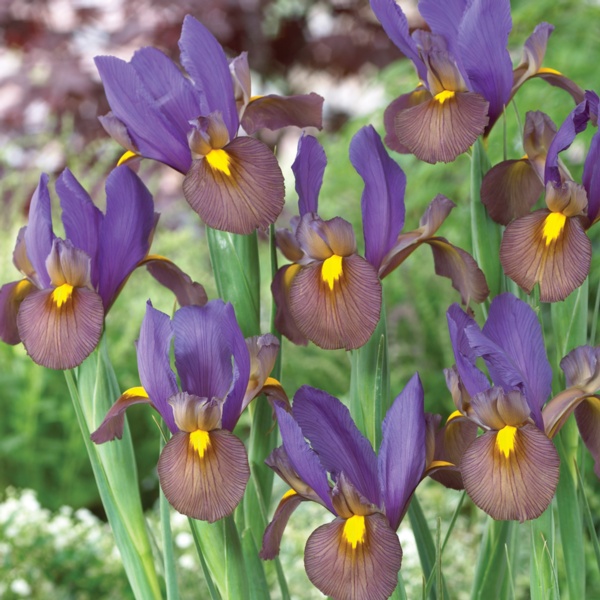
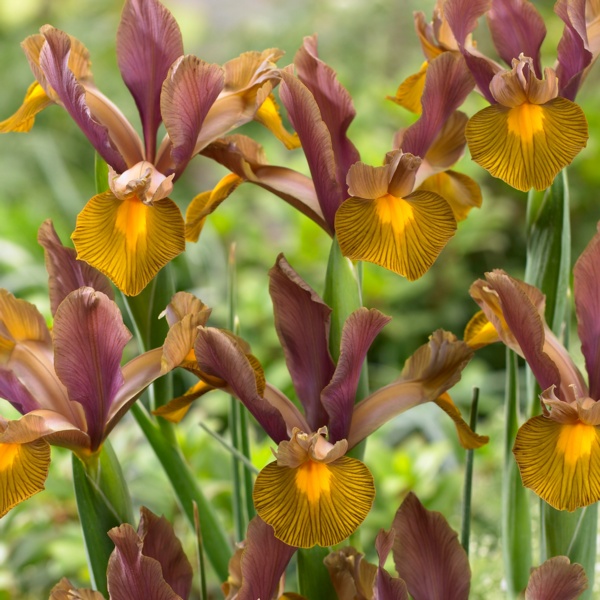
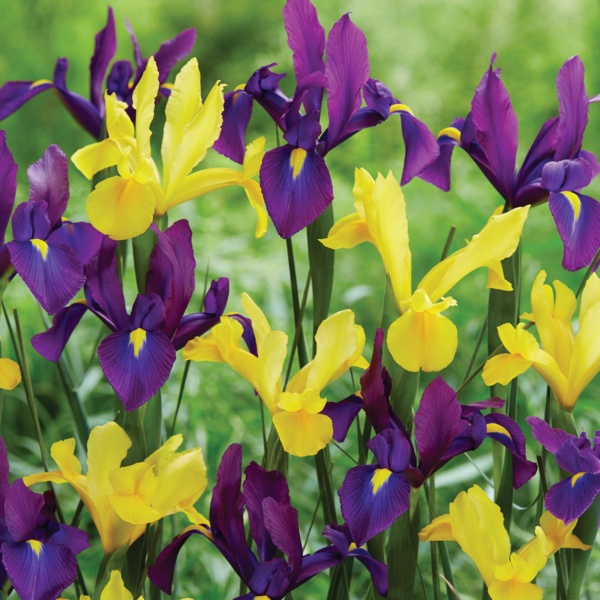
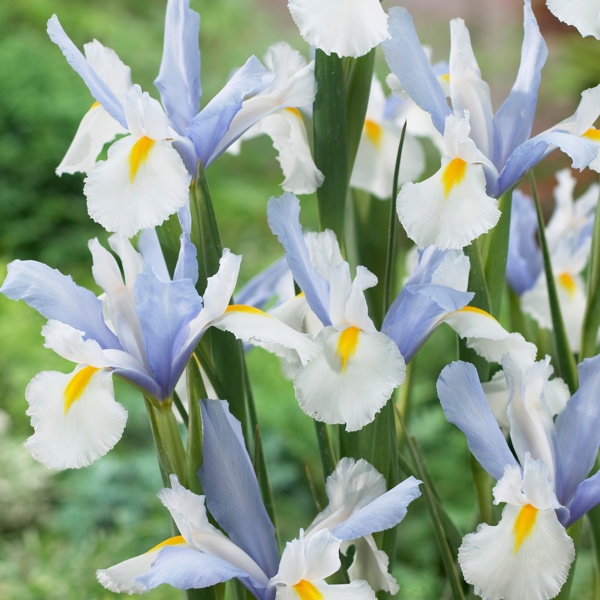
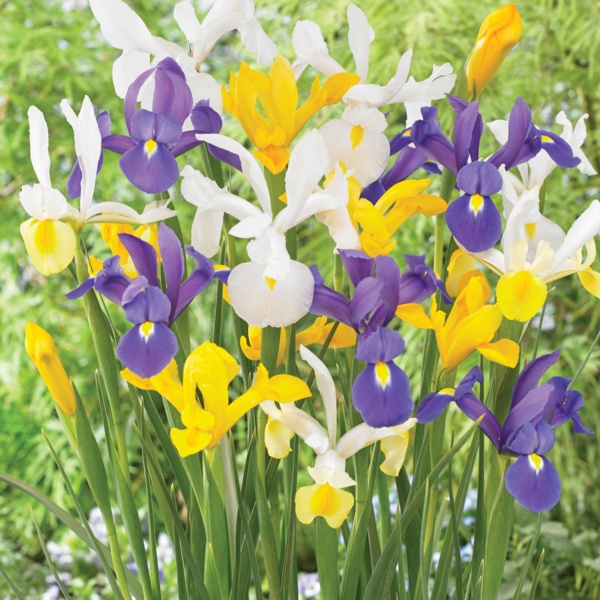
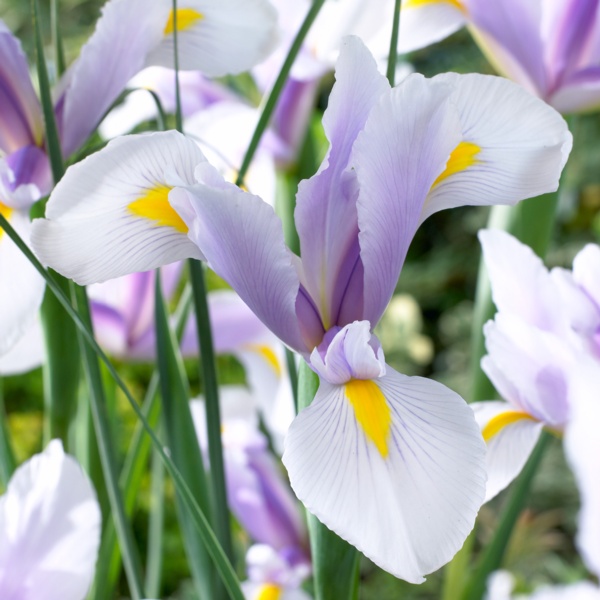
The Dutch Iris' unmatched presence is an elegant addition to any garden. Bright and airy, the Dutch Iris resembles a birds in flight. Exquisite orchid-like flowers in solids and mixes of blue, purple, yellow and white rest atop sturdy stems. Striking sword-like leaves.
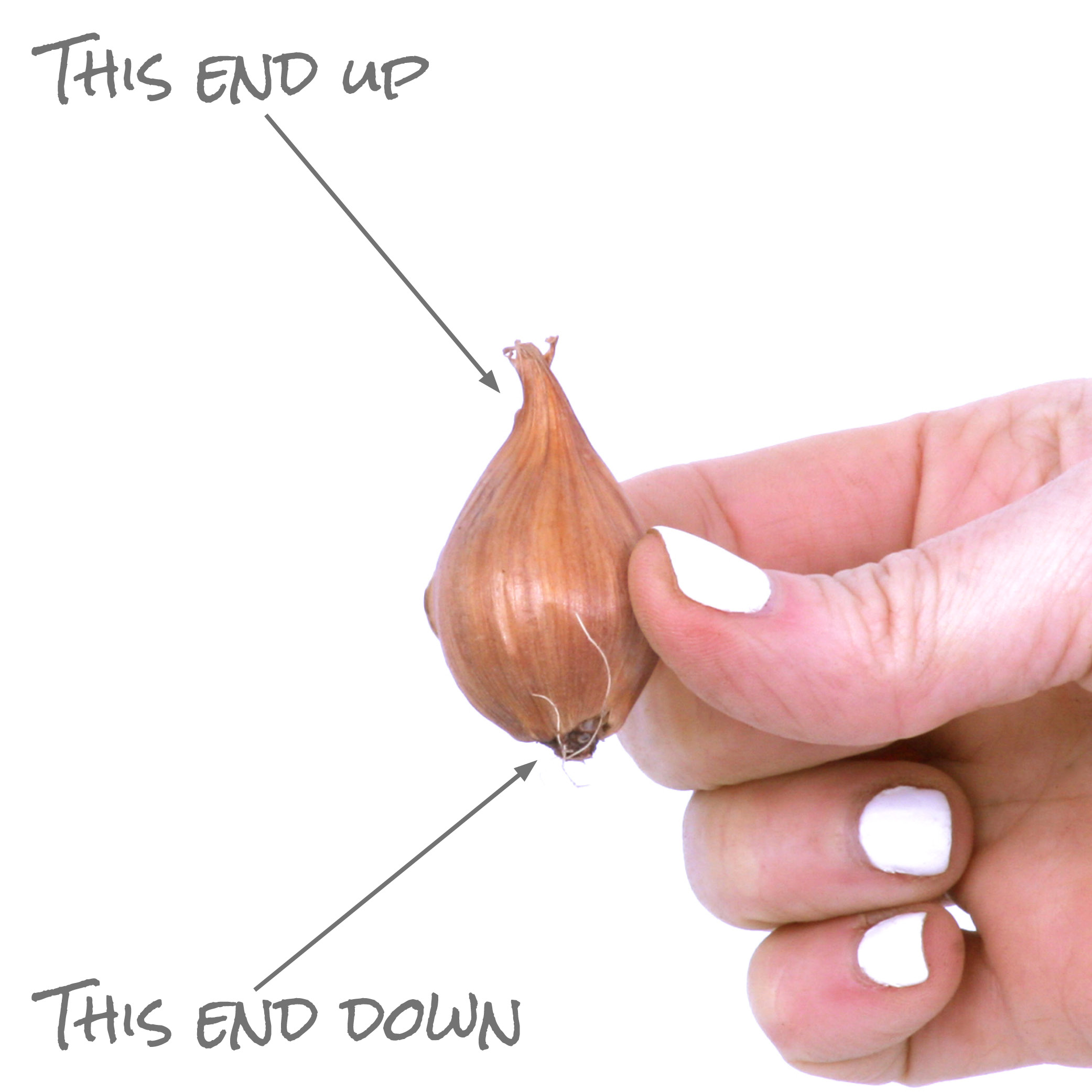 Plant in the fall, before the first frost hardens the soil. Dig a hole to the required depth. Place bulb in hole, pointed side up. Cover with soil and water thoroughly. Mulch in extreme climates.
For container planting, bury the bulb three times as deep as the bulb is wide. In zones 6 and below, you will need to protect your bulb containers. Place them near the foundation of the house or other structure. In zones 3-5, place the container in an unheated garage or shed.
After blooming, leave the bulbs in place so plants can clump or reseed. Divide only when containers or planting spaces become too crowded. Propagate in the fall by division after they have been chilled for four weeks in a moist medium.
Refer to the USDA Planting Zone Map to find your zone.
Dutch Iris bulbs can be planted in spring or fall. Select a planting site that has reasonably fertile soil and plenty of moisture that will not allow the bulbs to dry out in summer. Good drainage and a sheltered location will help them survive the winter to return for years to come. Best planted in large groups of 15 bulbs per square foot. It is recommended that gardeners in zone 5 should add a 2" layer of mulch in fall.