Erythronium
(er·y·thro·ni·um | \ ˌerəˈthrōnēəm \)
Also Known As:
Trout Lily, Fawn Lily, Dog's-tooth Violet, Woodland Glories, Golden Bells, Adder's Tongue
|
Blooms:
|
|
Spring to Early Summer |
|
Light Requirements: |
|
Partial Shade to Full Shade |
|
Plant Height: |
|
Varies by type. Ranges from 6-14". |
|
Hardiness Zones: |
|
Grow as Perennial in zones 3-9. Grow as Annual elsewhere. Find Your Zone |
About
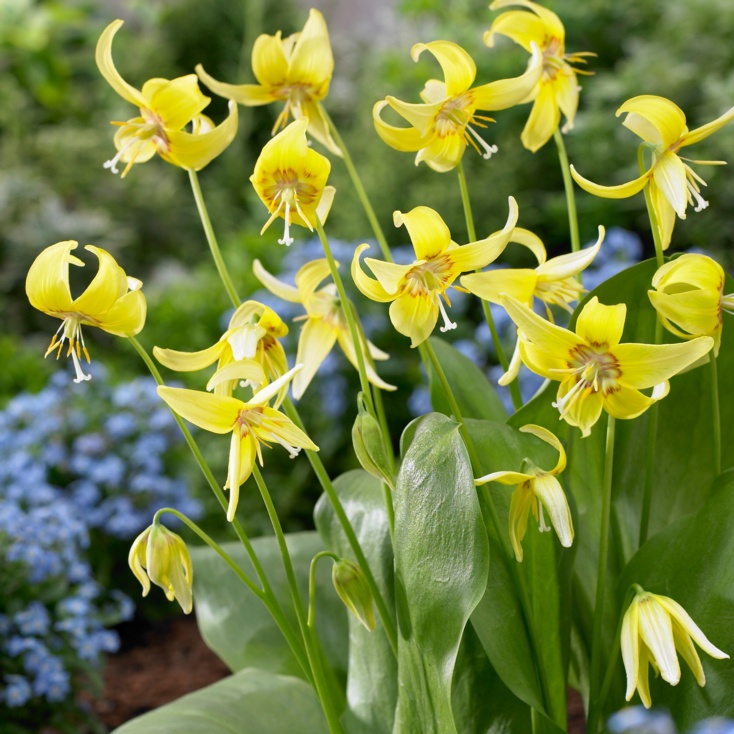
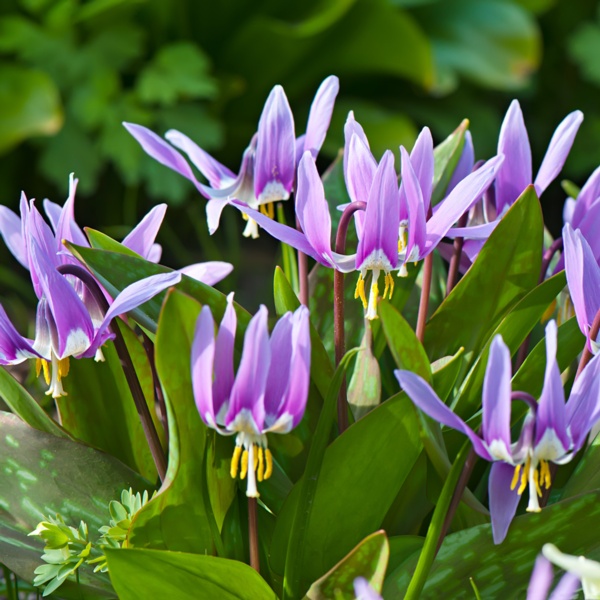
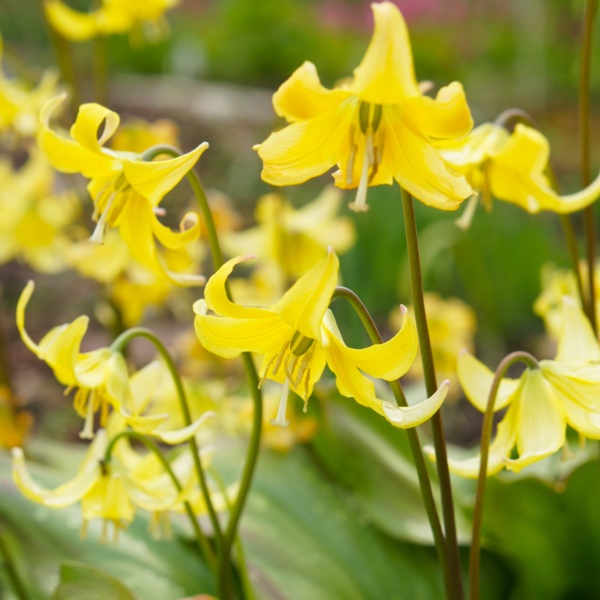
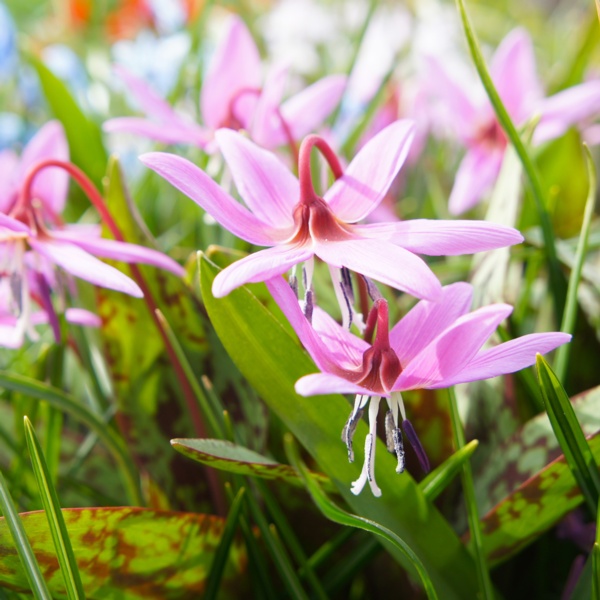
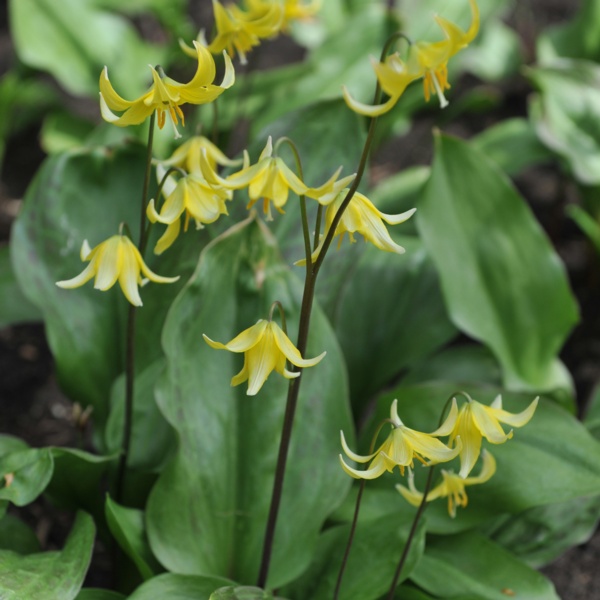
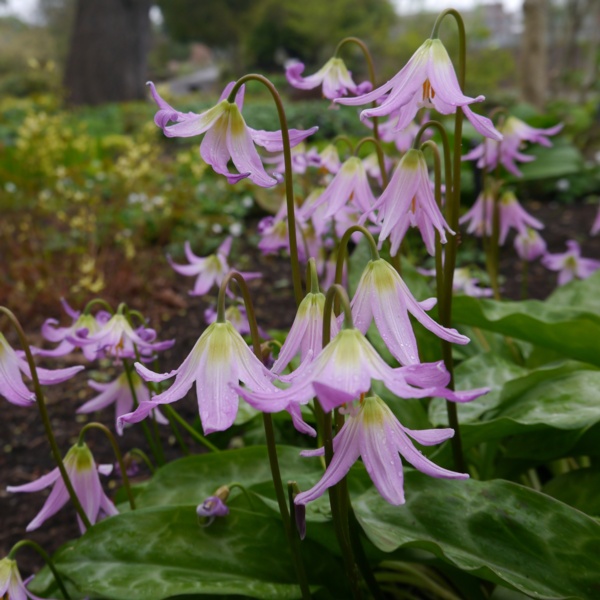
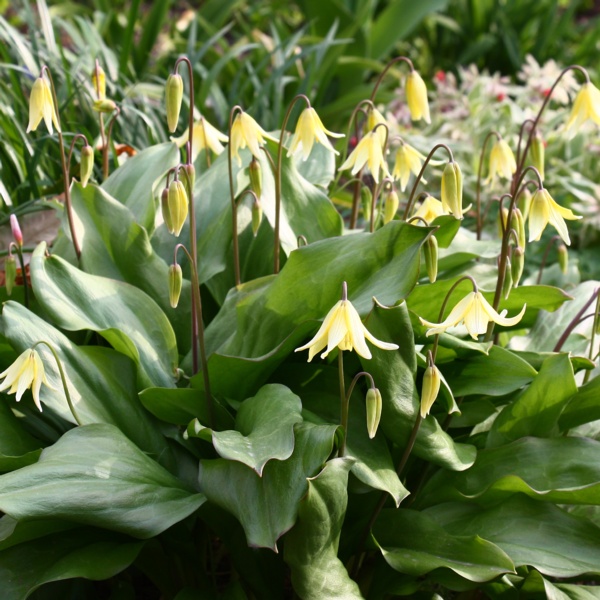
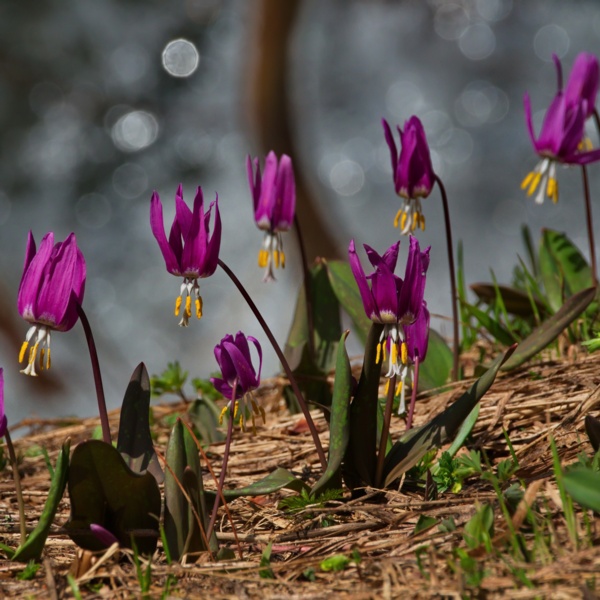
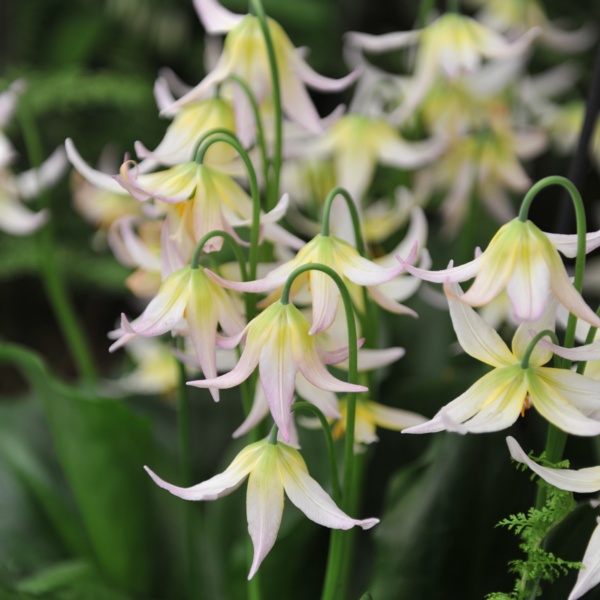
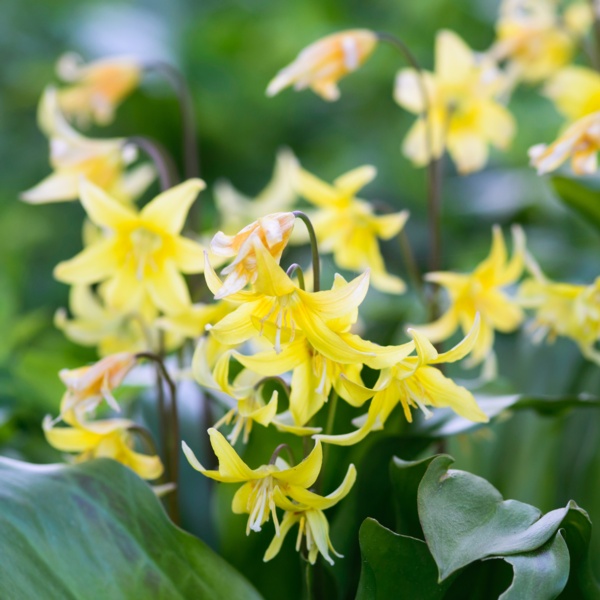
Erythronium produces a single, bell-shaped flower atop a naked stem with glossy foliage mottled with browns and purples. Its common name of adder's tongue refers to the tongue-like shape of the flowering shoot as it grows up that is said to resemble a snake's mouth. The name trout lily comes from the mottled leaves and blooms appearing during trout season. Fawn lily refers to the spotted leaves and two-leaves of the plant resembling the upright ears of a fawn. Dog's-tooth violet originates from the eranthis growing from tiny corms that supposedly resemble dog's teeth and its flowers somewhat resemble violets.
Highlights
- Naturalizes well if happy where it's planted and left undisturbed
- Deer & critter resistant
- Grows well en masse in woodland areas, around trees and shrubs and in shady areas of rock gardens
- Delightful, bell-shaped flowers
- Beneficial to pollinators; Attracts bees
Planting Care & Instructions
Plant in the fall, before the first frost hardens the soil. Before planting, soak the corms in lukewarm water 3-4 hours to jump start development.
Dig a hole to the required depth. Place corm in hole with the 'claws' pointing downward. Cover with soil and water thoroughly. Mulch in extreme climates.
Refer to the USDA Planting Zone Map to find your zone.
Growing Tips
Plant Erythronium in groups of 5 or more for an amazing garden display.