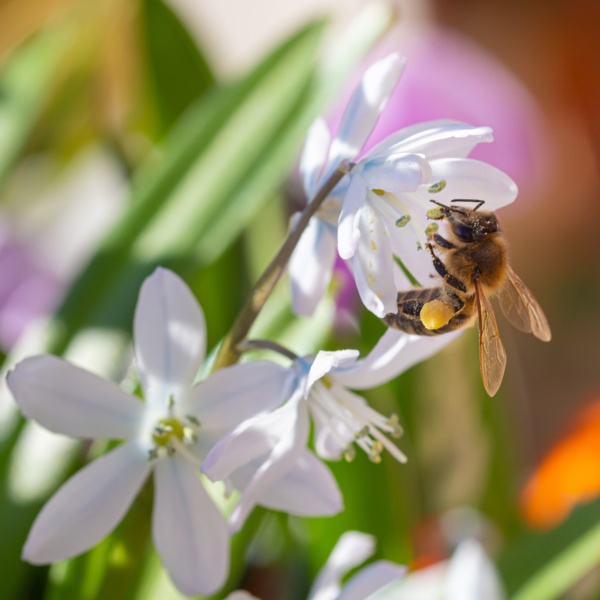
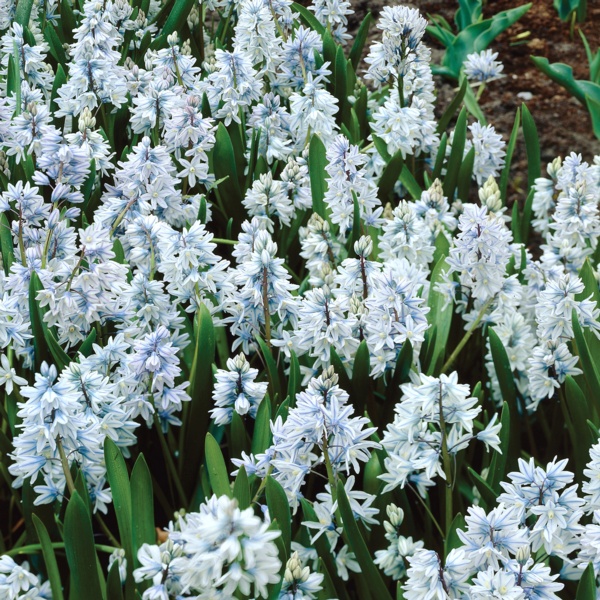
Striped Squill, Lebanon Squill
| When to Plant: | |
| Fall |
| Blooms: | |
| Early to Mid Spring |
| Light Requirements: | |
| Full Sun to Partial Shade |
| Plant Height: | ||
| 4-6" | ||
| Hardiness Zones: | |
| Grow as Perennial in zones 4-8. Grow as Annual elsewhere. Find Your Zone |
| Planting Depth: | |
| 2-3" |
| Plant Spacing: | |
| 2-3" |
| Plant Type: | |
| Bulb |
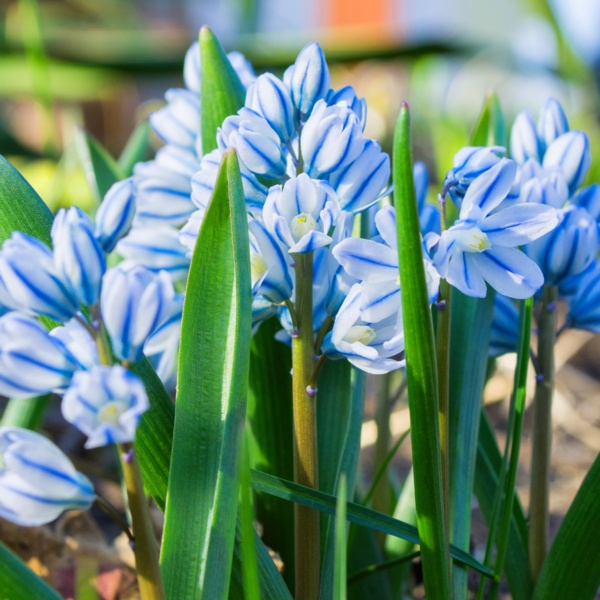
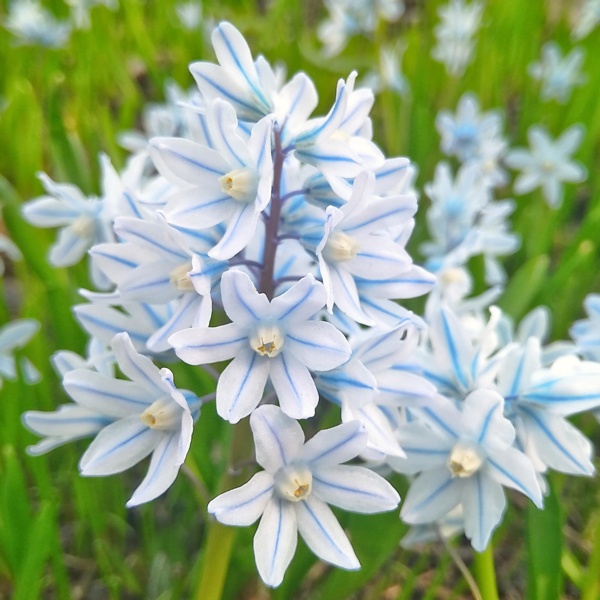
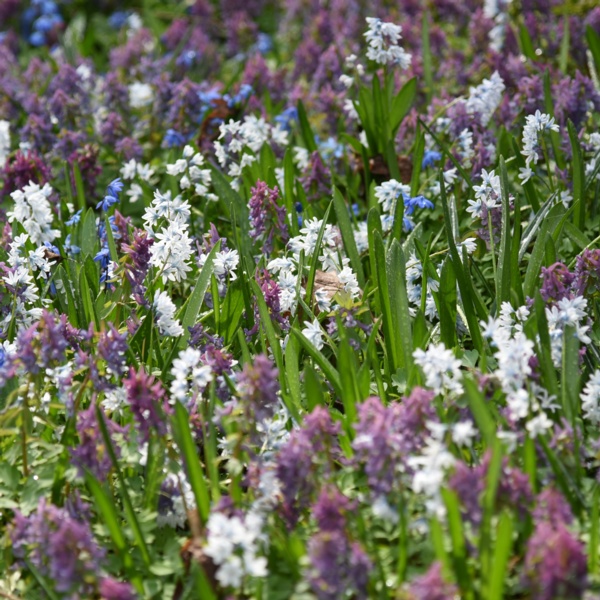
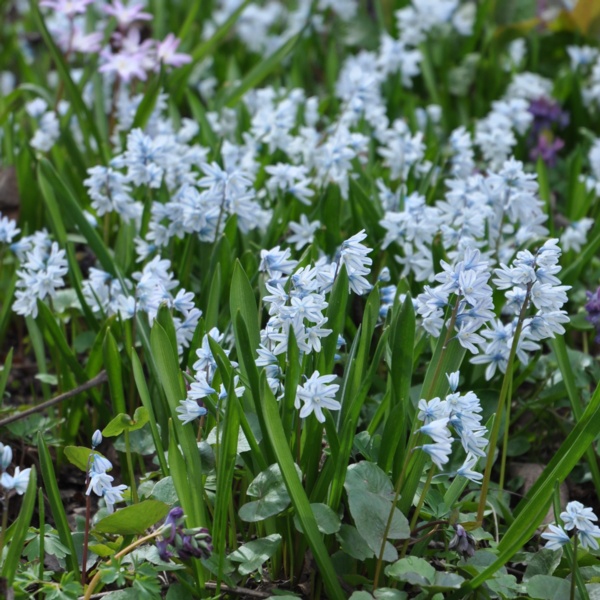
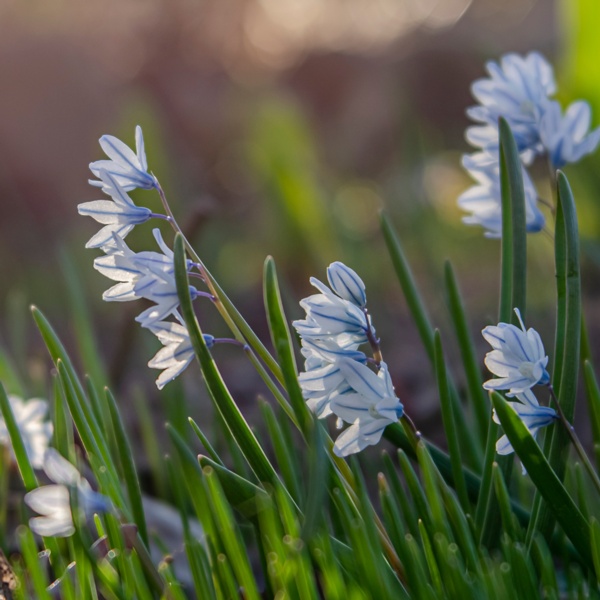
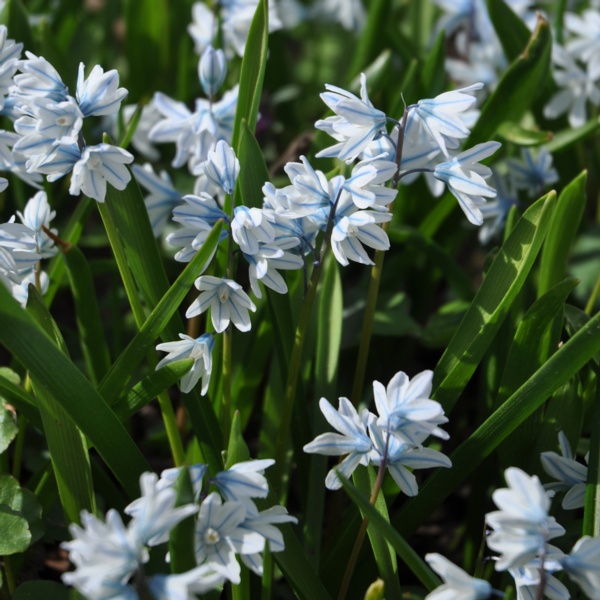
Puschkinia is a close relative of Chionodoxa and Scilla. This often unfamiliar bulb produces dainty, densely packed spikes of bell-shaped blue and white flowers that bloom fairly low to the ground making this a nice form of a spring ground cover. This wildflower bulb is an excellent companion to daffodils.
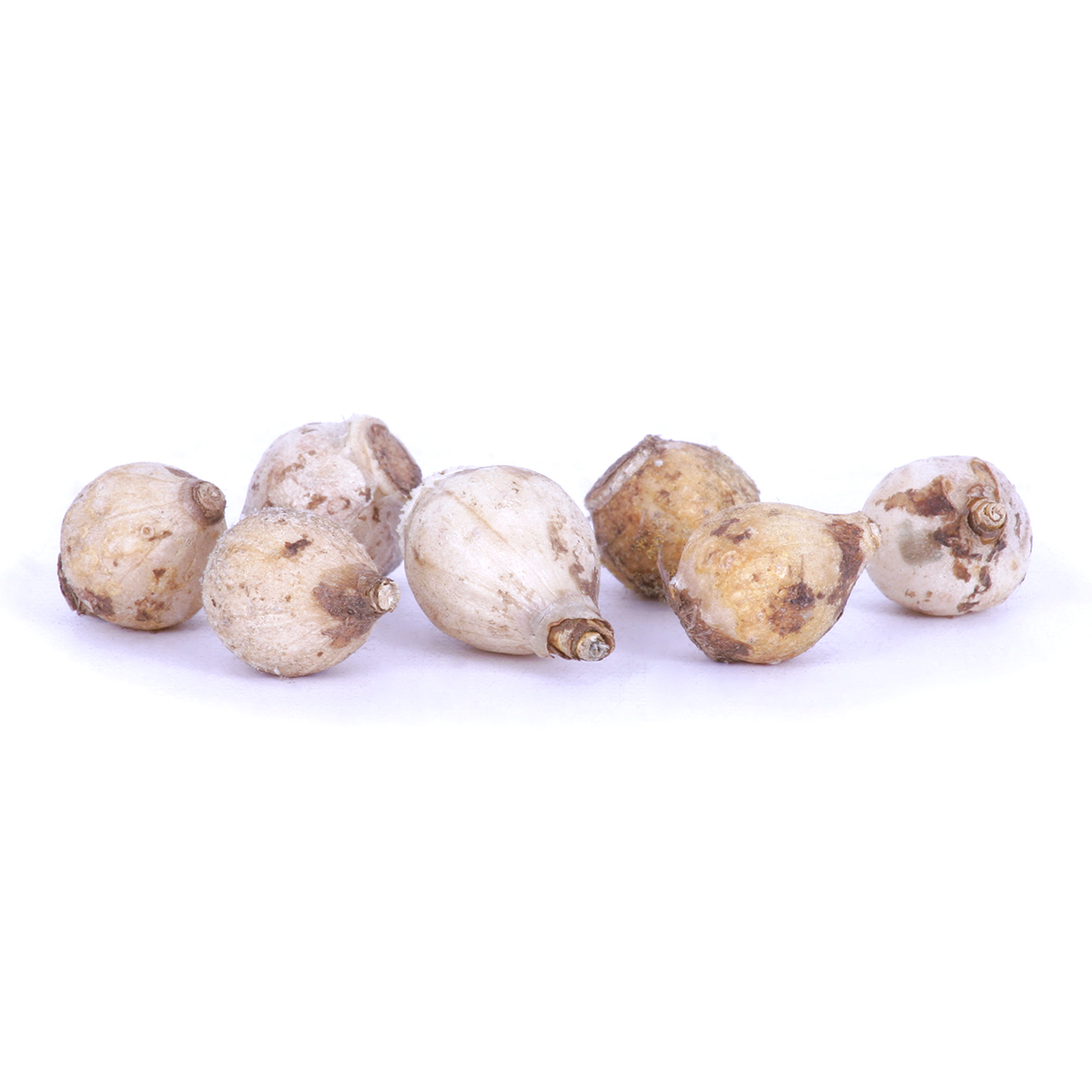
Plant in the fall, before the first frost hardens the soil. Dig a hole to the required depth. Place bulb in hole, pointed side up. Cover with soil and water thoroughly. Mulch in extreme climates.
For container planting, bury the bulb three times as deep as the bulb is wide. In zones 6 and below, you will need to protect your bulb containers. Place them near the foundation of the house or other structure. In zones 3-5, place the container in an unheated garage or shed.
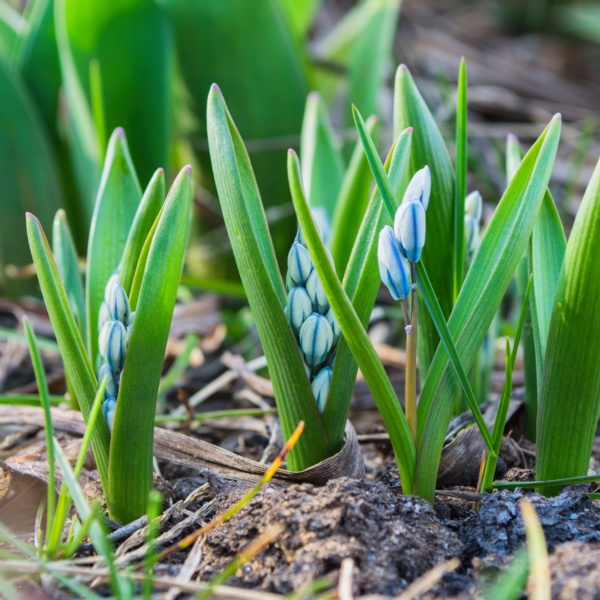
After blooming, leave the bulbs in place so plants can clump or reseed. Leave foliage in place after blooming. This lets the bulb grow and strengthen for future planting by allowing photosynthesis to take place, creating food from the leaves soaking in the sunlight. Foliage may be removed when leaves turn yellow and die back.
Divide only when containers or planting spaces become too crowded. Propagate in the fall by division after they have been chilled for four weeks in a moist medium.
Best planted en masse in well-draining soil along pathways, under trees and shrubs or large groupings in containers.