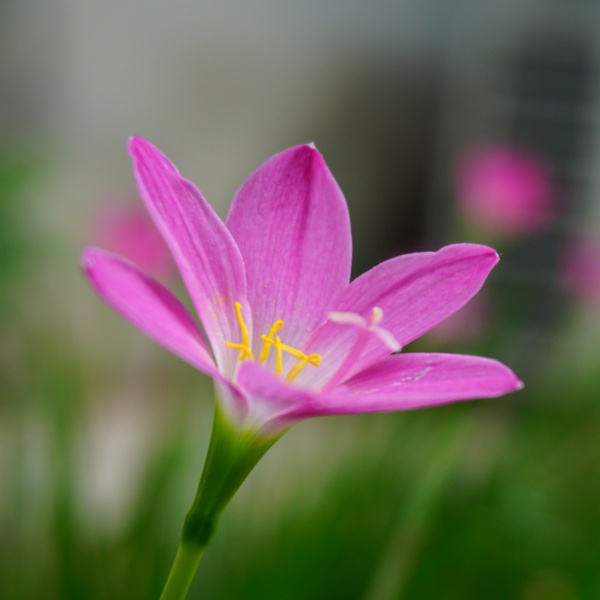
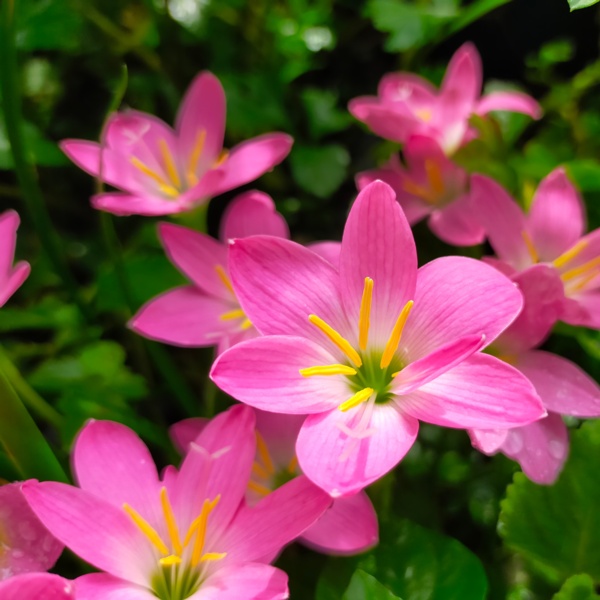
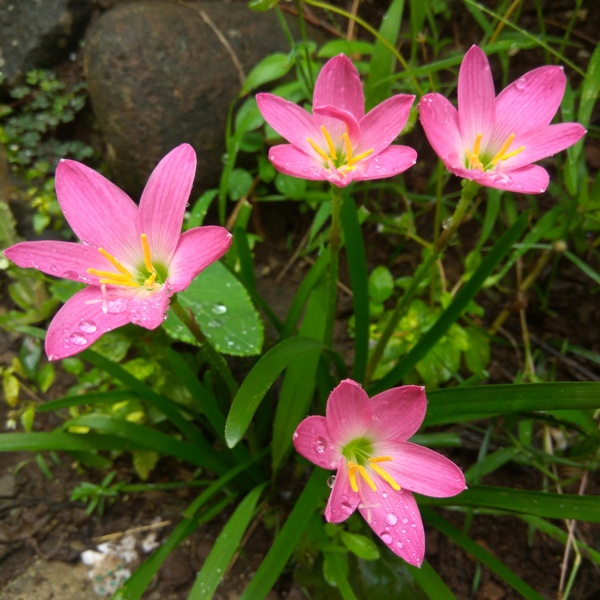
Rainflower, Rain Lily, Zephyr Lily, Atamasco Lily, Fairy Lily
| When to Plant: | |
| Spring |
| Blooms: | |
| Summer |
| Light Requirements: | |
| Full Sun to Partial Shade |
| Plant Height: | ||
| 8-12" | ||
| Hardiness Zones: | |
| Grow as Perennial in zones 8-10. Grow as Annual elsewhere. Find Your Zone |
| Planting Depth: | |
| 1-3" |
| Plant Spacing: | |
| 3-6" |
| Plant Type: | |
| Bulb |
 The name, Zephyranthes, comes from the fact that these little gems are known to burst into bloom immediately after periods of rain.
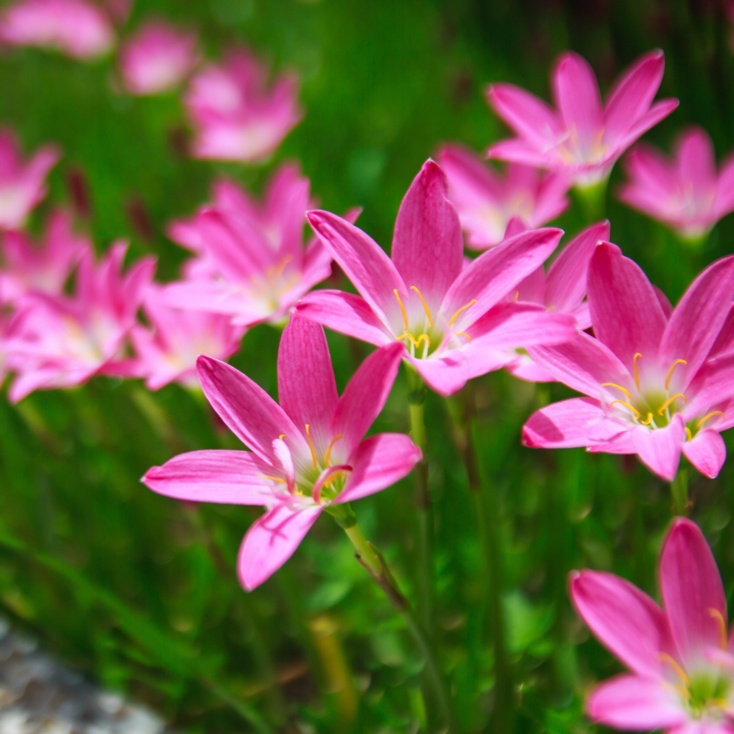
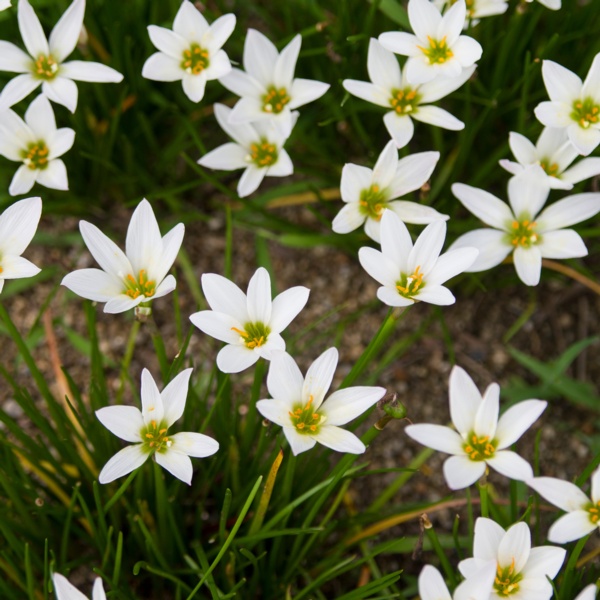
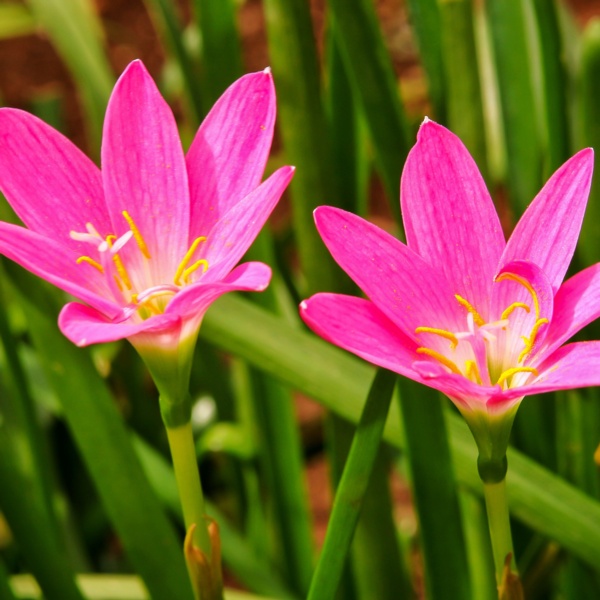
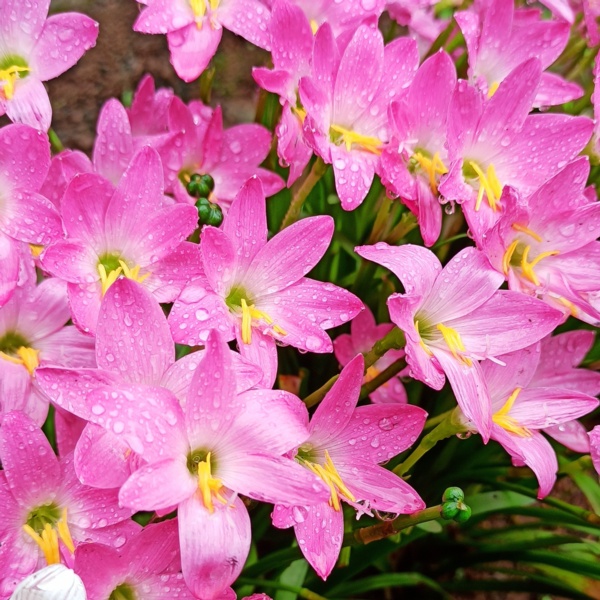
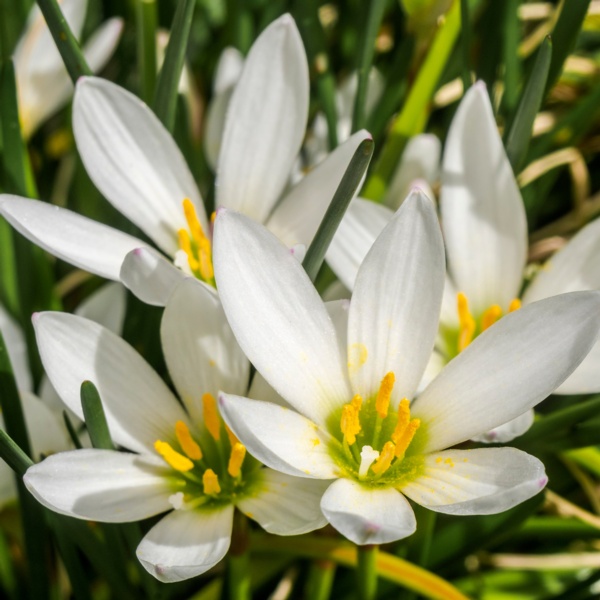
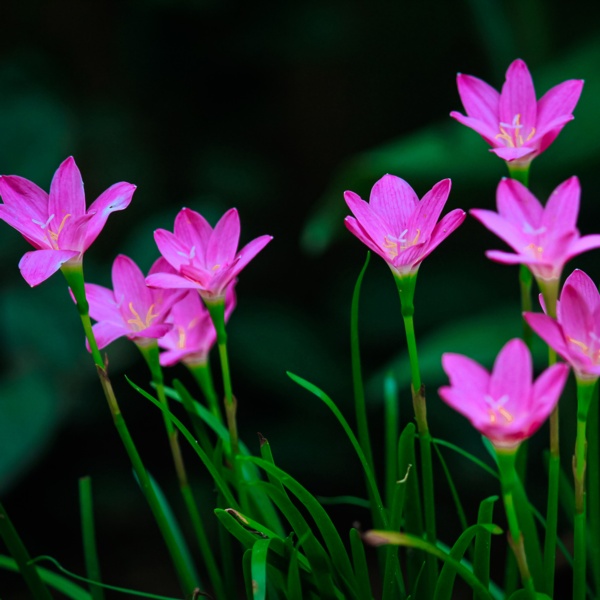
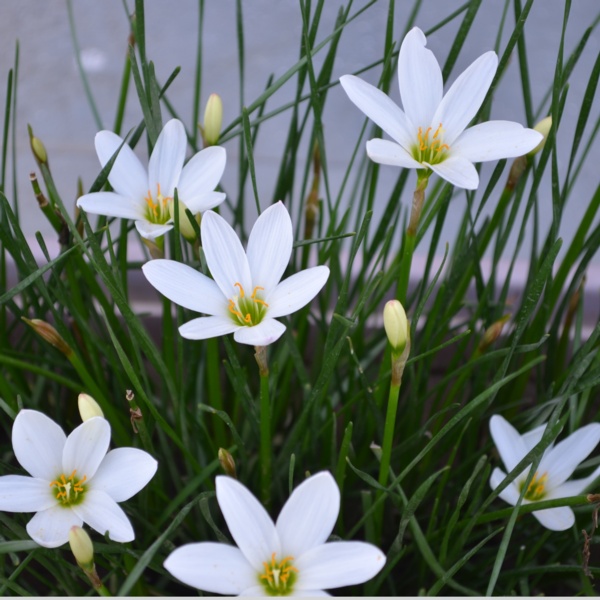
Zephyranthes is a tropical wildflower, native to Mexico and Central America, with large, pink, open, lily-like blooms with white throats. Blooms sit atop upright stems with narrow, spreading, strap-shaped leaves.
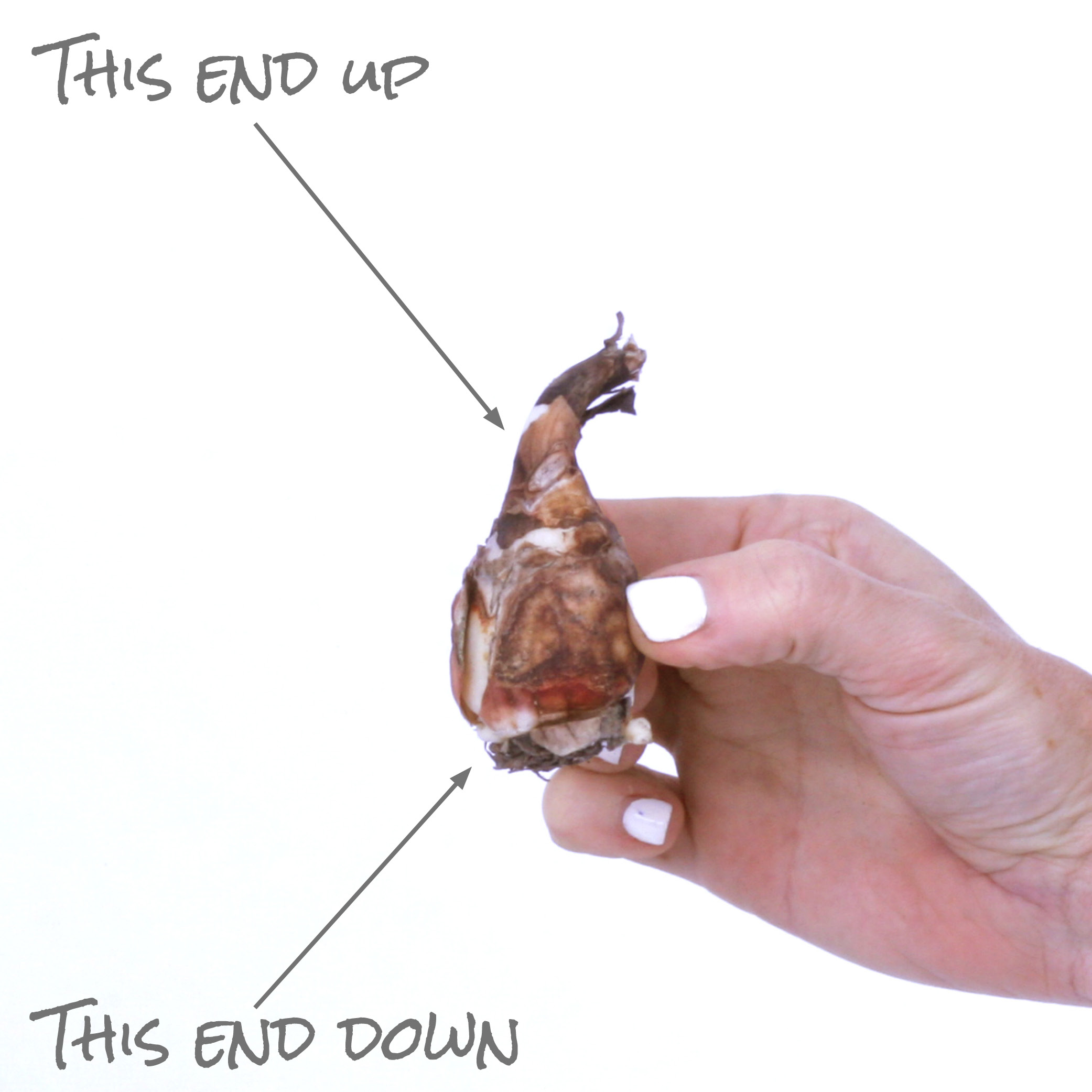 Plant Zephyranthes in the spring after all danger of frost has passed. Zephyranthes performs best in full sun to partial shade.
The ideal soil is rich and porous and drains well, yet still holds enough water for the roots. If your soil is heavy clay and drains slowly, or very sandy and does not hold water, add organic soil amendments like peat moss or ground bark. Spread a 3-4 inch layer of soil amendment if needed and incorporate into the soil to a depth of 10 inches.
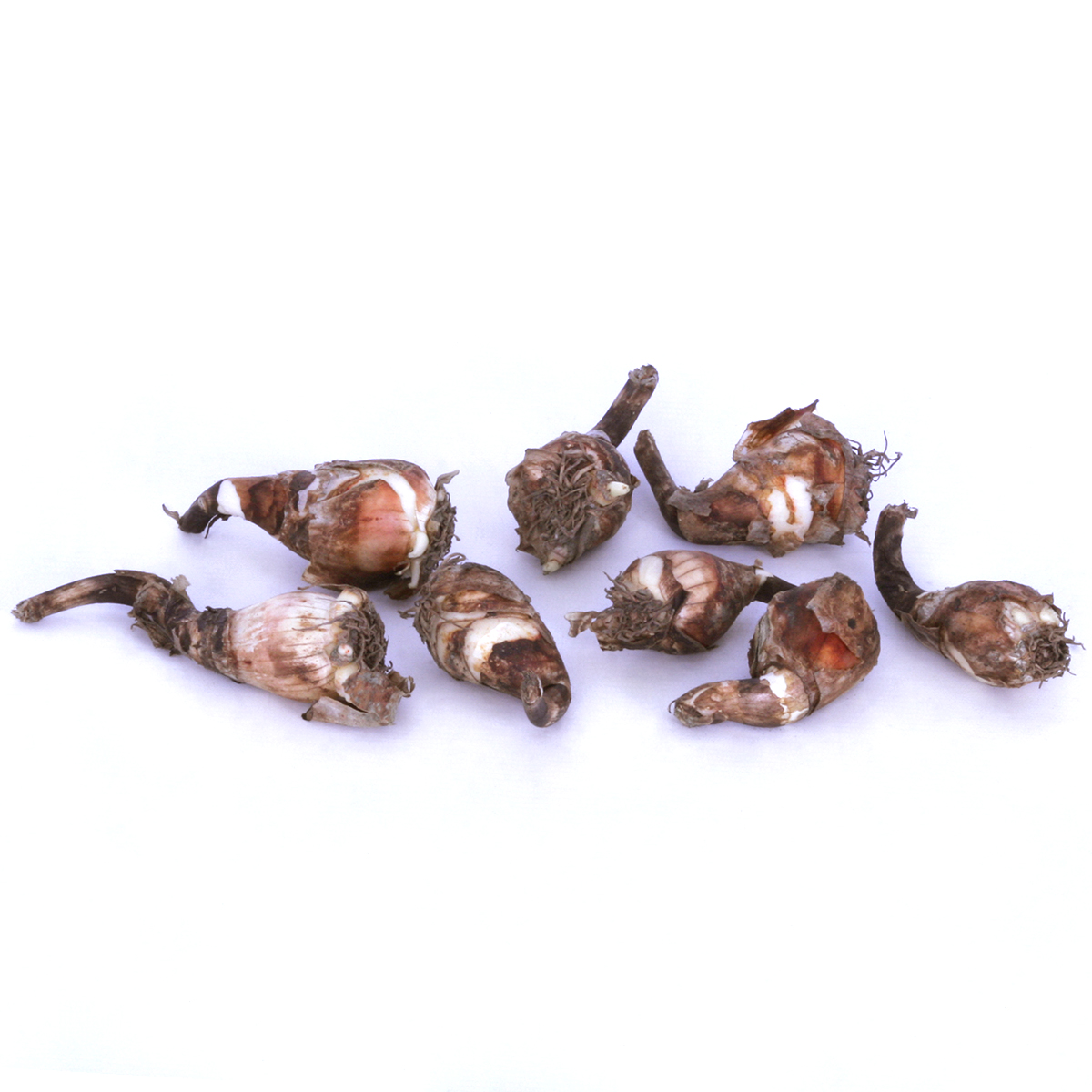
Plant bulbs 1-3" deep and 3-6" apart. Cover with soil. When planting a large number of Zephyranthes in one bed, excavate the entire area to the recommended depth, work fertilizer into the bottom of the trench, set out bulbs and then cover all at once. Water thoroughly at planting. While actively growing, water frequently and thoroughly so that water will reach roots. Mulch to keep the soil cool and to prevent the soil from drying out.
Fertilize monthly.
Discontinue watering when leaves begin to turn and fade back.
Lift and store over winter if planted in colder climates. Mulch in milder climates to protect from frost.
Zephyranthes perform best with little water so container planting pairs with early season bloomers is not recommended.
Plant immediately after purchase.