
Sage
| When to Plant: | |
| Spring |
| Blooms: | |
| Summer |
| Light Requirements: | |
| Full Sun |
| Plant Height: | ||
| Varies by type. | ||
| Hardiness Zones: | |
| Grow as Perennial in zones 4-8. Grow as Annual elsewhere. Find Your Zone |
| Planting Depth: | |
| 1.5-2" |
| Plant Spacing: | |
| Varies by type. |
| Plant Type: | |
| Bare Root |
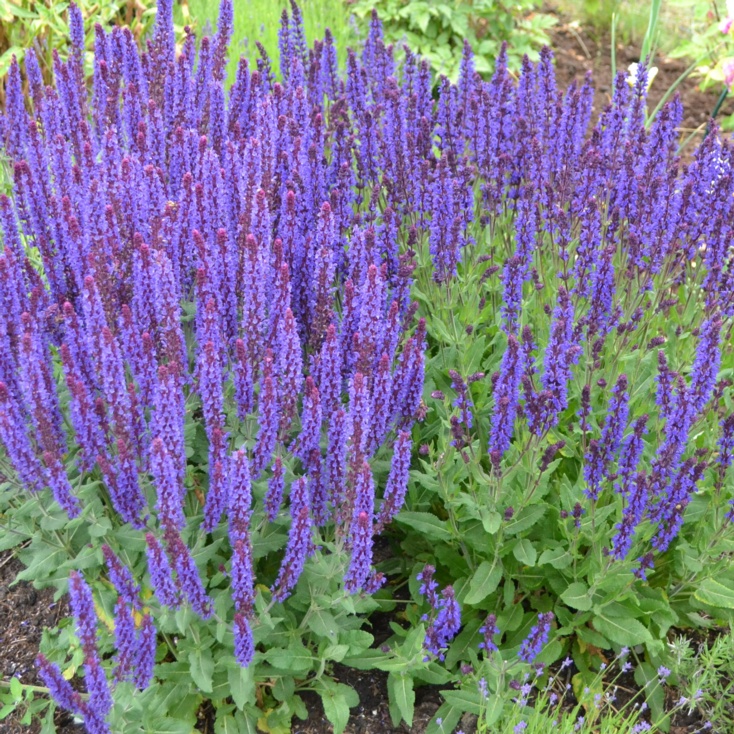
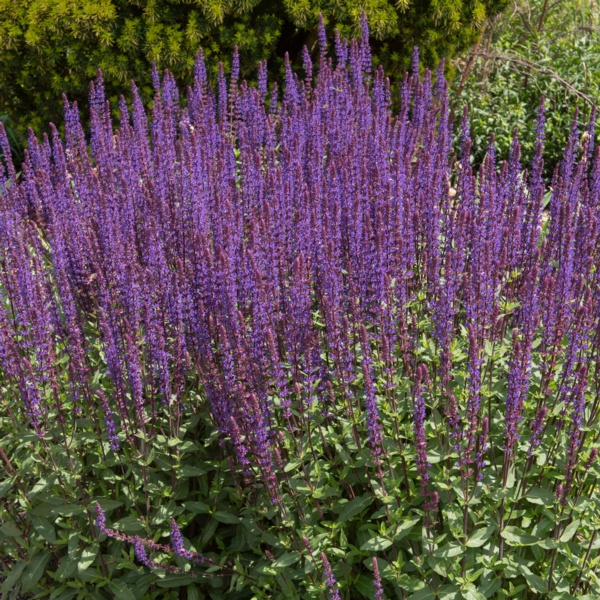
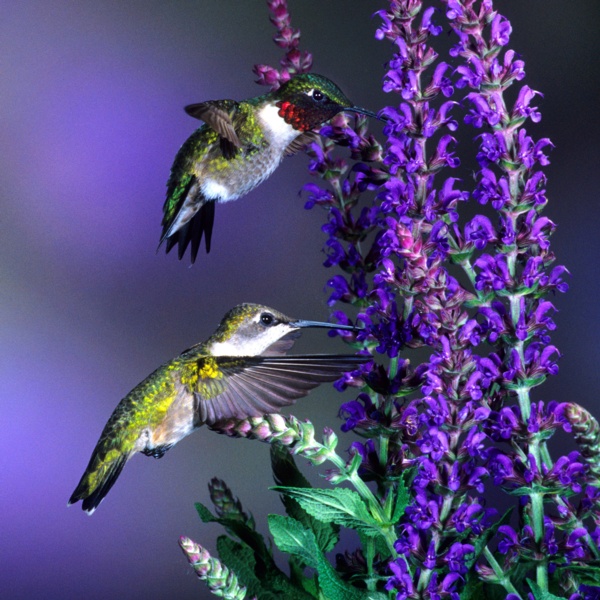
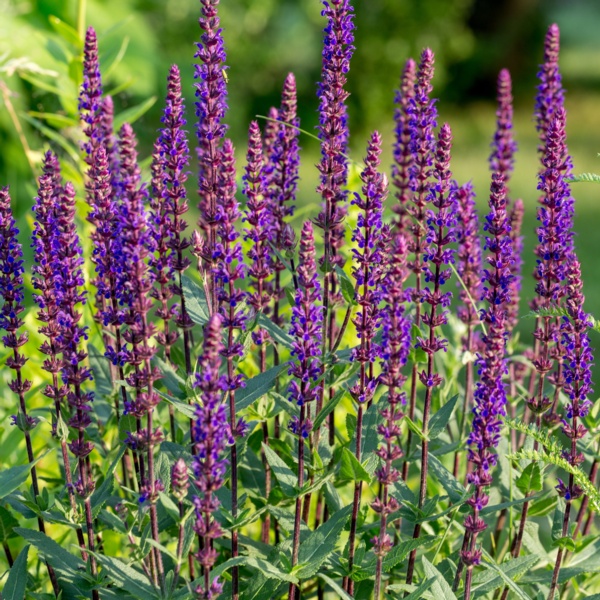
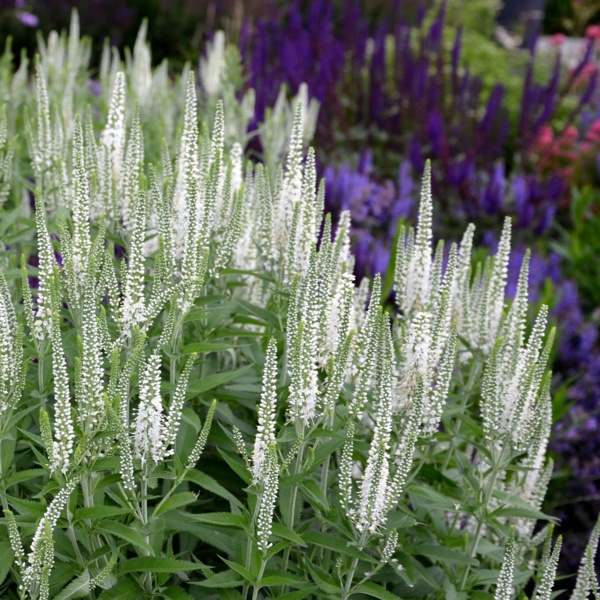
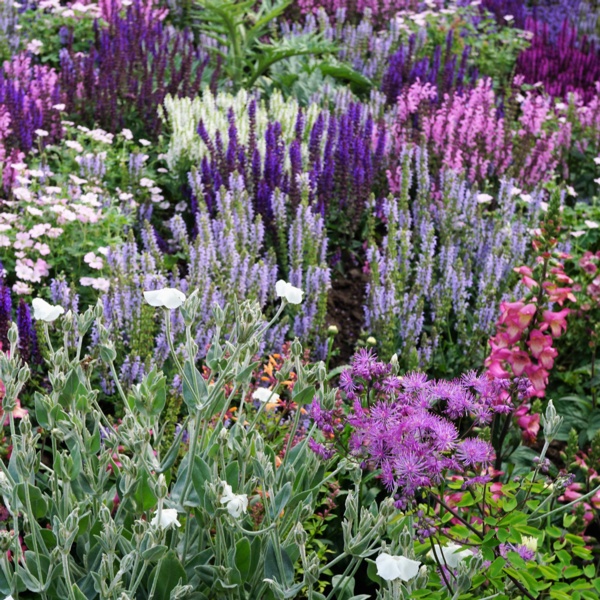
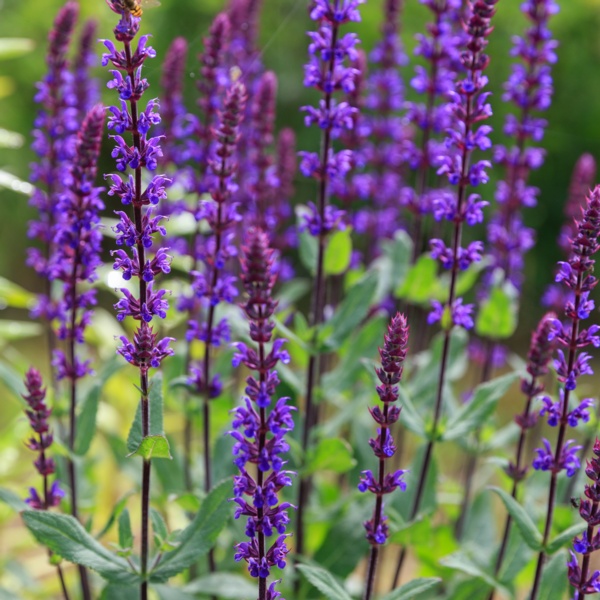
Salvia is commonly referred to as wood sage. It is an upright, clump forming perennial with green leaves and spikes of tiny tubular flowers. The leaves of this mint family member are aromatic.
Plant Salvia in the spring after all danger of frost has passed in a full sun location in moist but well draining soil.
Soil preparation: The ideal soil is porous and drains well and yet still holds enough water for the roots. If your soil is heavy clay and drains slowly, or very sandy and does not hold water, add organic soil amendments (peat moss or ground bark). Spread a 3-4" layer of soil amendment, add fertilizer and incorporate together into the soil to a depth of 10".
To plant: Dig a hole 1.5-2" deep in a sunny (at least 6 hours of direct sun), well drained location. Place the salvia in hole with roots pointed down and space as noted by variety. Cover with soil and water. Mulch in extreme climates.
Easily grown in average, dry to medium, well-drained soils in full sun. Prefers moist, humusy soils with good drainage, but also performs well in gravelly or sandy soils.
Plants may repeat bloom throughout the summer, but need regular moisture to encourage this. Remove spent flower spikes to help extend the bloom period.
